 Phone/Wechat
+86-18538591025
 ADDRESS
Xisihuan Ring-Road East, Tielu, Xiliu Lake sub-district, Zhongyuan District, Zhengzhou, Henan China

Core Drill Rig for Geotechnical Investigation
A geotechnical investigation is bought as a set of design parameters, not as a set of holes. The client wants a stratigraphic model, strength and stiffness values, a permeability figure and a groundwater level. The borehole is only the access route to that evidence, which means a core drill rig for geotechnical investigation is chosen for whether it lets the tests be done properly, and depth rating comes a long way down the list.
The test decides what the hole must be
A hole drilled for a sample and a hole prepared for a permeability test are different products. Sampling wants a clean hole of known diameter, advanced without disturbance ahead of the tool. A packer test wants a known annulus so the packer seals against the wall, a hole that stands open for the duration, and a water supply at controlled pressure. Instrumentation wants a straight, clean hole that can be backfilled in stages around a standpipe.
Each requirement lands on the machine as a constraint on bore, feed and holding, so the specification to read first is the test list.
What the published numbers actually govern
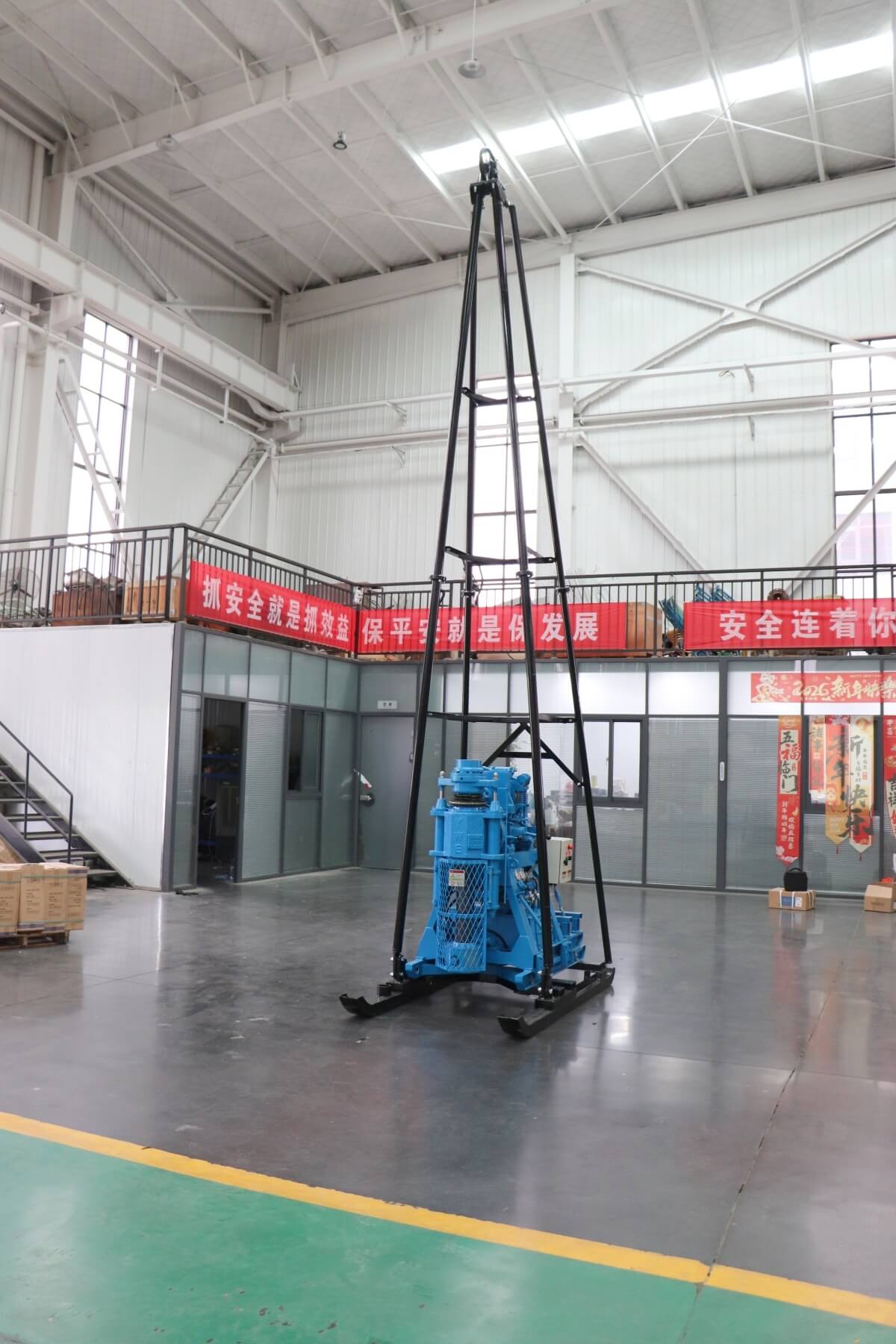
Our LE90R quotes 100 m with NW casing, a 92 mm spindle bore and a 500 mm feed stroke. The bore is the practical limit on what passes through the head, so it sets the rod and casing series and, through them, the packer sizes you can run. The stroke dictates how often the string is re-chucked, which matters more on a testing programme than on a production coring job, because every re-chuck is a chance to disturb the interval you just cleaned.
On building and infrastructure work the typical hole is 15 to 40 m. The depth rating is rarely the binding constraint; the tooling that fits through the head usually is.
Standing still is a specification
A staged packer test requires the string to hang undisturbed while each stage stabilises, and an SPT requires the rods to be still while the hammer falls. Rotation is stopped, feed is stopped, and the whole string is held by the hoist.
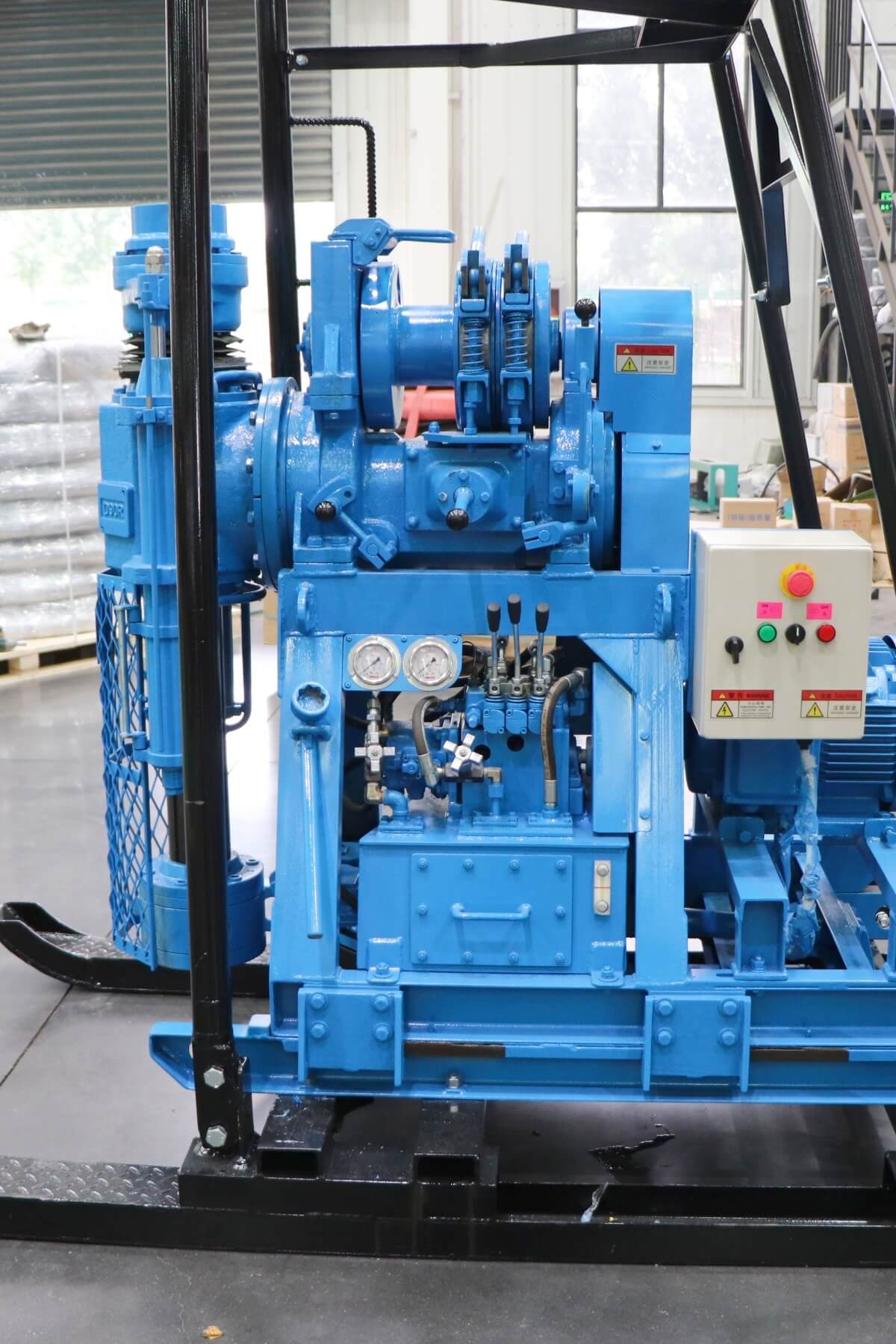
That is where the 1,500 kg hoist capacity and the planetary drum with wrap-around brake and clutch bands earn their place, rather than in the drilling itself. On a core drill rig for geotechnical investigation the hold is manual: over-centre cam levers, a driller standing by, and no automatic load holding. Ask for the brake's holding behaviour on a wet string before you commit, because a string that creeps during a test invalidates the stage.
Angle holes reach the surface that matters
Slope stability, retaining structures and abutment investigations are usually about an inclined surface, and a vertical hole only intersects it by luck. The head on this rig swivels, with a quoted drilling angle of 360°, which allows the hole to be aimed at the interval of interest instead of being drilled past it.
An inclined borehole also changes the load path. The string wants to slide back between runs, the casing wants to drop, and the driller is working against gravity on every connection. That is a training and procedure question as much as a machine question, so ask whether the supplier has run inclined holes on this model.
Water is part of the test, and it is not in the specification
Permeability testing needs water delivered at a controlled pressure with the volume measured, and flushing during coring needs a steady supply at the bit. The published specification for this machine includes neither a pump nor a flow meter, and it should not be assumed to. Treat the water system as a separate package: pump, pressure control, flow measurement and a settling arrangement, sized to the test method the specification calls for.
The arithmetic is per hole, not per metre
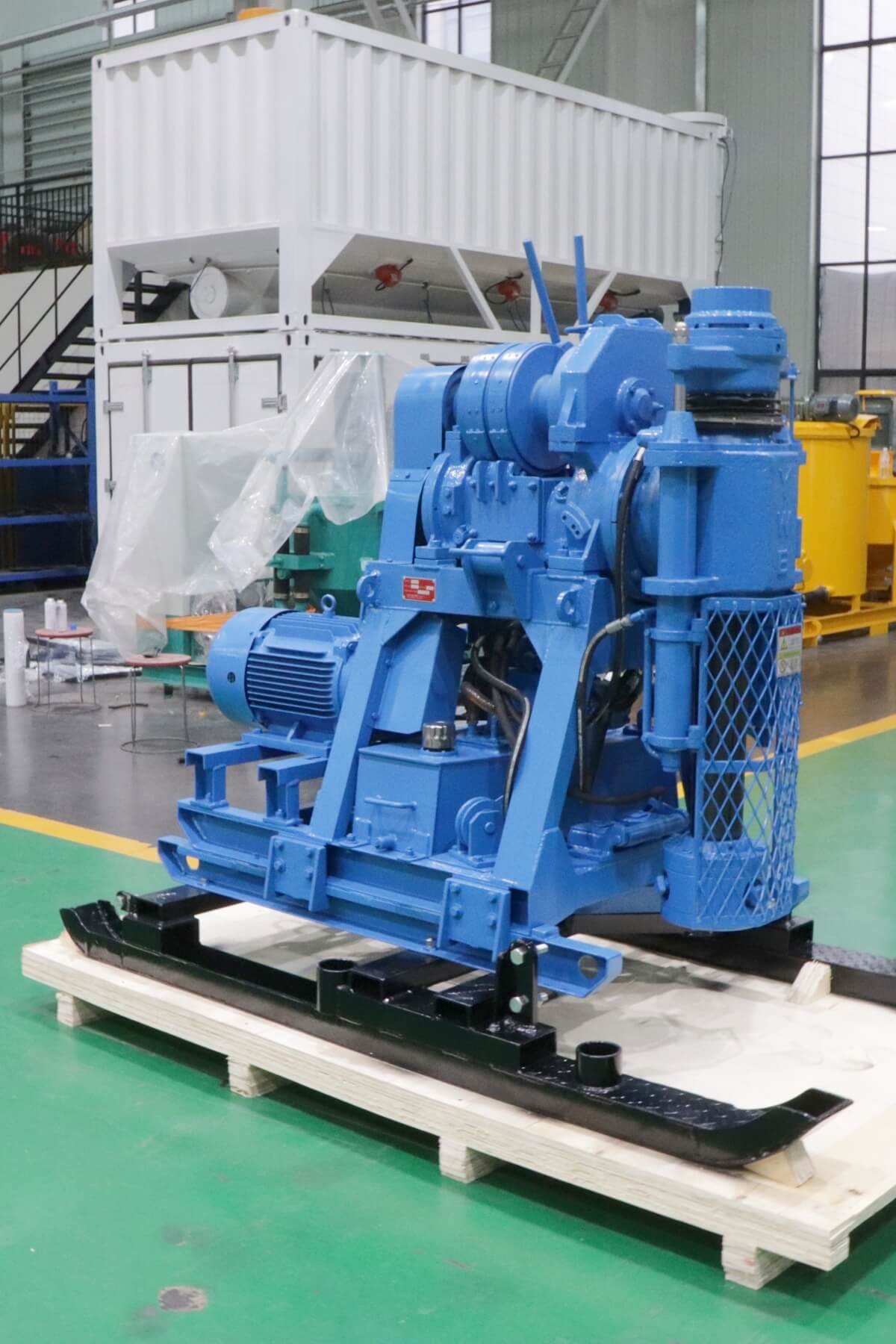
A grid of twenty holes at 15 m each and three holes at 100 m each come to similar totals, and they are different purchases. The first needs twenty setups: tow or winch into position, level the skid, raise a 5.75 m mast, anchor, drill, move. Setup dominates the day, and the machine's dimensions become commercial facts: a 1,140 mm wide skid passes gates and alleys that a track carrier cannot, and a 5.75 m mast needs overhead clearance at every one of those twenty positions.
That is the honest reason a compact core drill rig for geotechnical investigation wins work in built-up areas. It is not faster at the bit; it is faster between holes.
Where this machine stops fitting
Beyond the stated capacity, above NW tooling, or into PQ wireline production, a heavier head and string are needed. On soft ground where the skid cannot be towed at all, a track carrier is the answer. And where the programme is deep rock coring for design-grade rock mass classification, the required recovery and orientation usually point to a different class of rig.
What to send with an enquiry
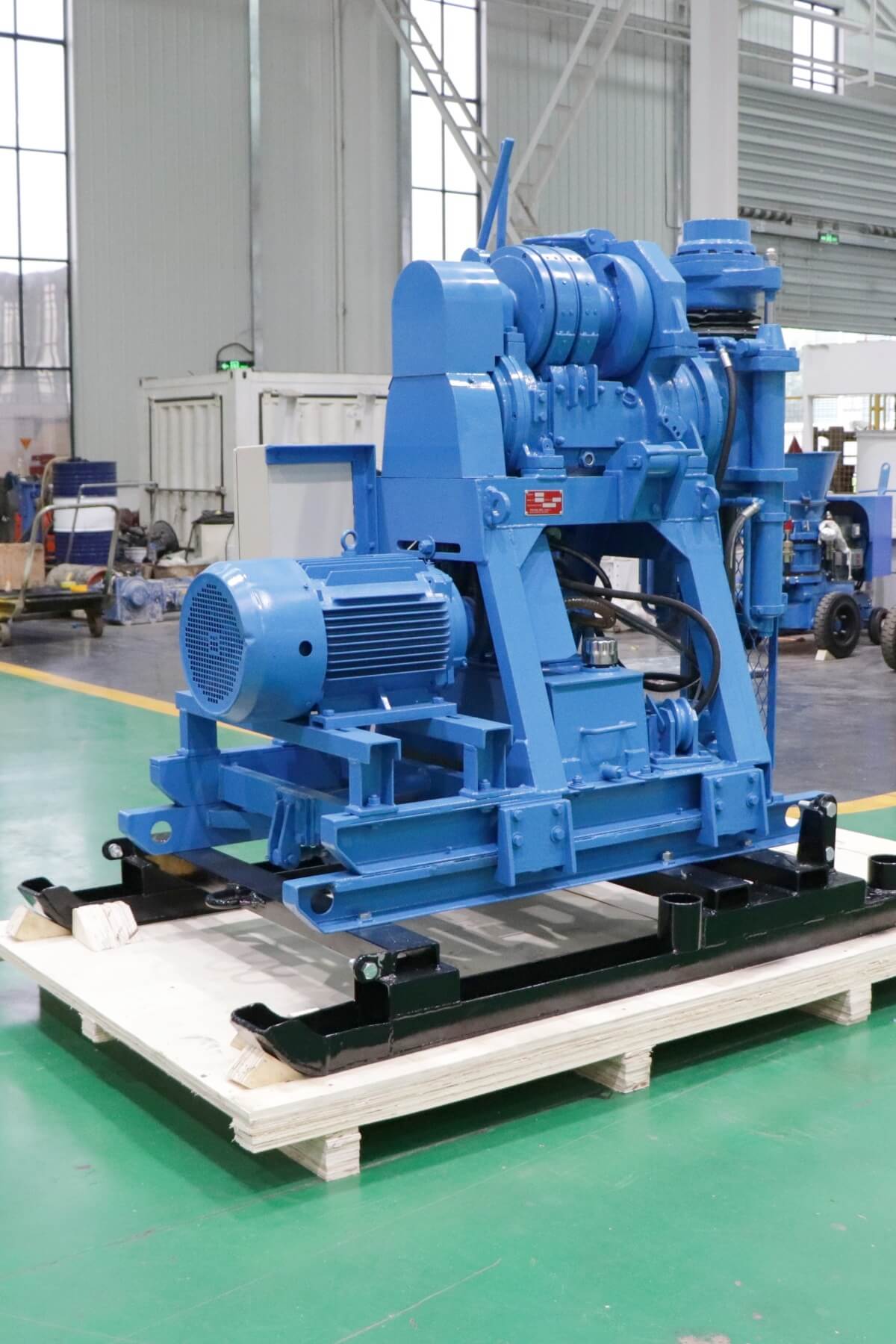
Choosing a core drill rig for geotechnical investigation starts with the test list: SPT, undisturbed sampling, packer or Lugeon testing, vane shear, or instrumentation installation. Then hole diameter and casing series, hole count and grid spacing, maximum depth in soil and in rock, angle requirements, the water supply available, access width and overhead clearance, and whether the pump, packer, rods and casing are to be quoted with the rig. Send these to sales@leadcrete.com.
 contacts
email:
sales@leadcrete.com
Phone/WhatsApp/Wechat:
86-18538591025
Import&Export Dept.:
86-371-63902781
fax:
86-371-63526676
address:
Xisihuan Ring-Road East, Tielu, Xiliu Lake sub-district, Zhongyuan District, Zhengzhou, Henan
China
Solution

Talking about the outstanding features of cast-in-place foam concrete

Cast-in-place foam concrete is a new type of engineering field material developed in recent years; it has the characteristics of light weight, good fluidity, strong durability, low cost and simple construction.
What’s the purpose of grouting?
The purpose or aims of grouting includes: 1. Seepage control; 2. Water plugging, 3. The consolidation; 4. To prevent landslide; 5. To reduce surface subsidence; 6. Improve the foundation bearing capacity; 7. Backfill; 8. Reinforcement.


 get in touch
Copyright Notice © 2014 Zhengzhou Lead Equipment Co.,Ltd. All rights reserved.Site Index Product Index
 +86-18538591025
 sales@leadcrete.com
 中文
 English
 Your Position:
 (Live chat)

 Whatsapp
