 Phone/Wechat
+86-18538591025
 ADDRESS
Xisihuan Ring-Road East, Tielu, Xiliu Lake sub-district, Zhongyuan District, Zhengzhou, Henan China

In major projects such as tunnel excavation and foundation reinforcement, cement slurry quality directly impacts construction safety. Traditional slurry mixing equipment suffers from issues like inadequate mixing and reliance on electricity. The high-speed diesel-powered cement slurry mixer stands out with advantages including independent power and efficient mixing. This article analyzes this engineering tool from its principles to its applications.
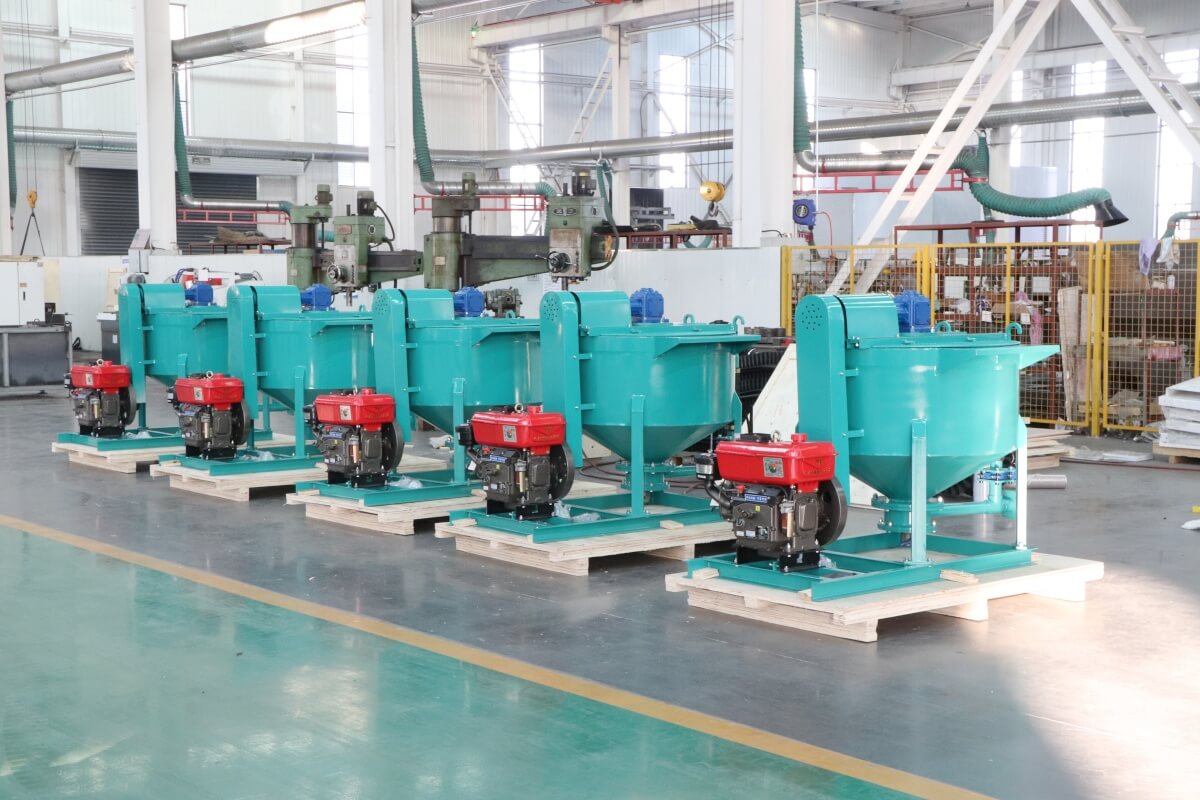
Cement slurry is a cementitious material formed by mixing cement, water, and specialized additives in specific proportions. Primarily used for filling structural gaps, reinforcing foundation soil, and sealing tunnel rock masses, it serves as a critical material for ensuring the integrity of engineering structures.As specialized equipment for preparing cement slurry, cement slurry mixers fundamentally differ from traditional concrete mixers: Concrete mixers focus on blending sand/aggregate with cement, while slurry mixers achieve ultra-fine, uniform dispersion of cement powder with water and additives to prevent clumping and sedimentation.High-speed mixing is the core prerequisite for ensuring cement slurry quality: conventional low-speed mixing readily causes cement particle agglomeration, forming "pseudoplastic" slurry that not only reduces structural bonding strength but also clogs grouting equipment. High-speed mixing breaks particle agglomeration through intense shear forces, ensuring slurry homogeneity and laying the foundation for smooth grouting operations and effective reinforcement.
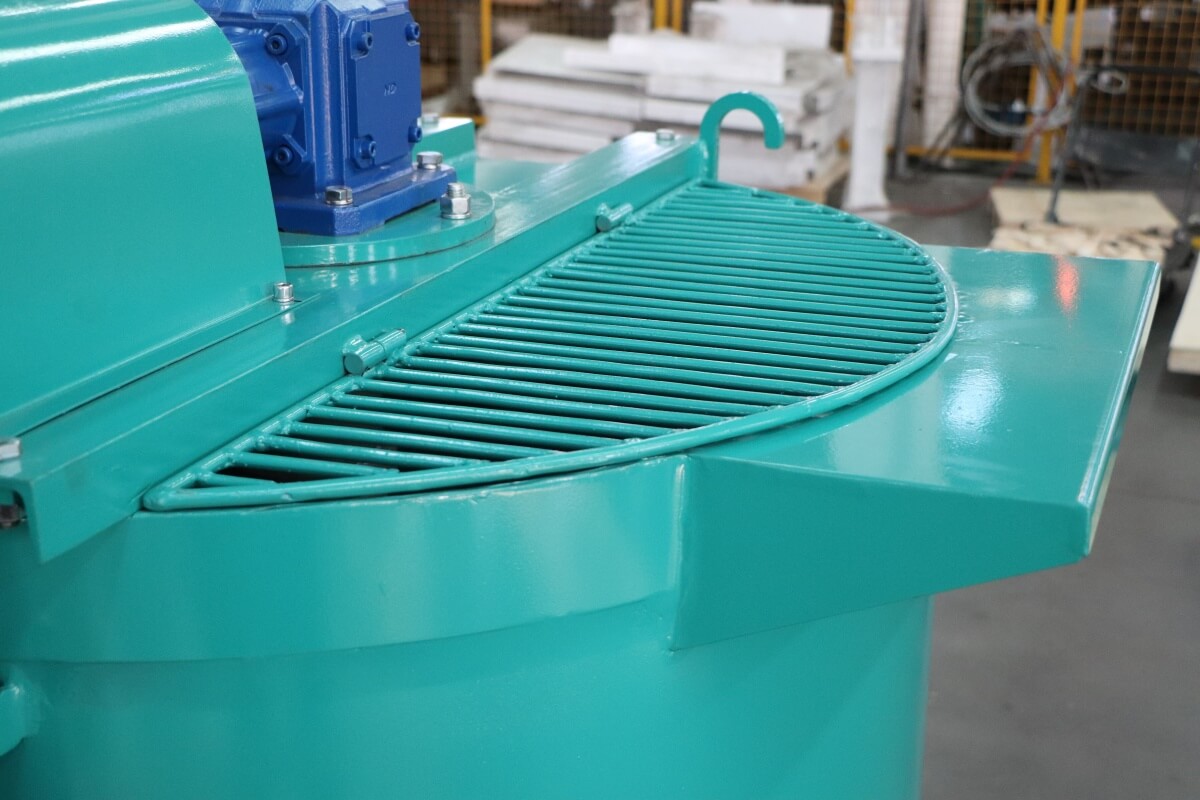
The high-speed diesel-powered cement slurry mixer utilizes a diesel engine as its power source, equipped with a high-speed rotating impeller. This industrial-grade slurry preparation equipment comprises the following core components:• Diesel Engine: Delivers stable high-power output, suitable for off-grid environments;• Mixing Tank: Constructed from wear-resistant materials to withstand long-term, high- intensity operation;• High-Speed Impeller: Achieves rotational speeds of 1500-3000 r/min, generating strong vortexes for uniform mixing;
• Control System: Integrates speed regulation and material ratio monitoring for user- friendly operation.Compared to electric grout mixer machines, diesel-powered models offer the key advantages of grid independence, higher torque, and greater adaptability. They are widely used in engineering applications such as tunnel excavation, soil stabilization, slope protection, foundation grouting, and mining operations.
With accelerating global infrastructure development, intensified mineral resource extraction, and increased projects in remote areas, market demand for efficient, mobile, and self- contained slurry mixing equipment continues to rise. The industry currently exhibits three major trends:1. Enhanced Mobility: Trailer-mounted and skid-mounted designs facilitate flexible transportation between job sites;2. Preference for Diesel Power: As projects in remote, off-grid areas increase, diesel- powered models become the preferred choice due to their independent power supply advantage;3. Performance upgrades: Large-scale projects drive demand for high-speed, high-capacity, automated slurry mixers to meet intensive construction requirementsn remote, off-grid areas increase, diesel- powered models become the preferred choice due to their independent power supply advantage;
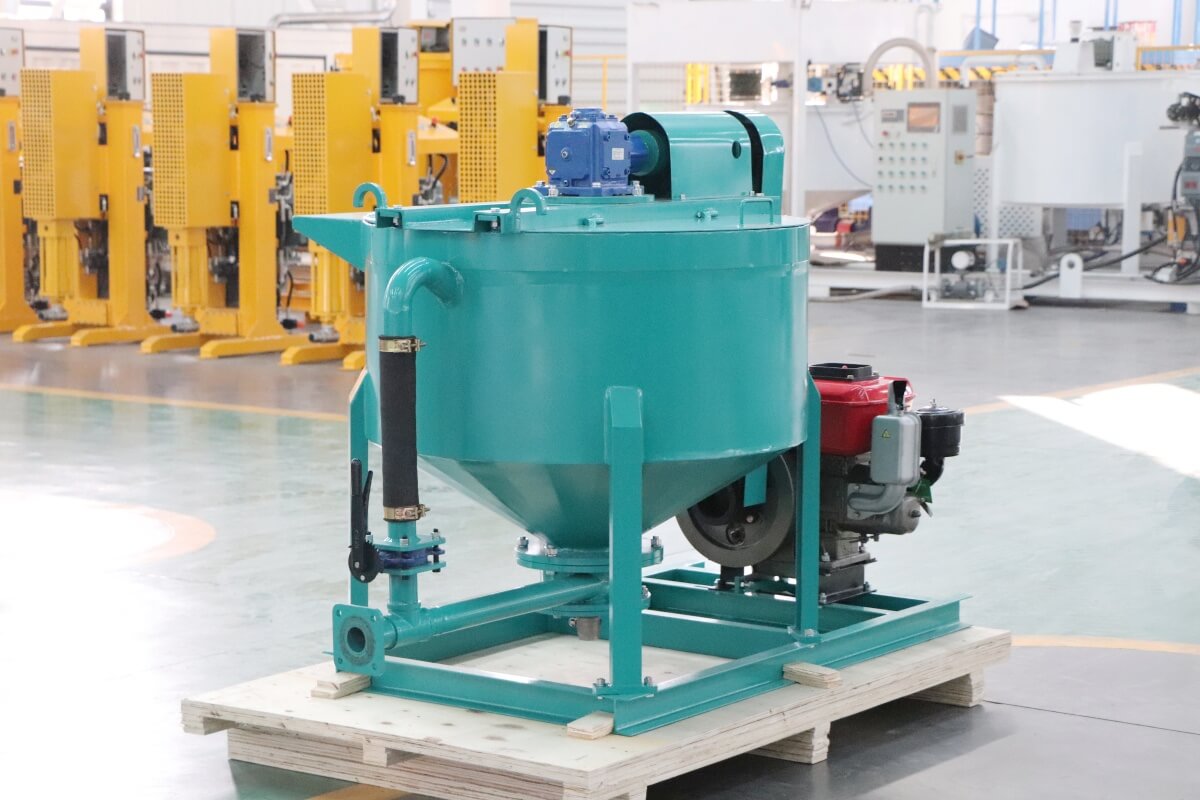
High-speed diesel slurry mixers employ vortex mixing technology. A diesel engine drives the impeller to rotate at high speeds, generating a strong shear vortex field within the mixing tank. This forces cement powder, water, and additives to collide and disperse thoroughly, ultimately forming a uniform and stable slurry. The standard workflow is as follows:1. Preparation Phase: Check diesel fuel level and water tank level; confirm equipment is fault-free.2. Material Loading Sequence: First inject the preset proportion of clean water. Afterstarting the equipment, slowly add cement powder, followed by specialized additives (e.g., water-reducing agents, early-strength agents);3. Mixing Stage: High-speed agitation for 3-8 minutes breaks cement particle agglomerations through vortex shear forces, ensuring slurry uniformity meets specifications;4. Discharge Stage: Upon completion of mixing, the slurry is conveyed to the construction site via a grouting pump. Continuous discharge or batch discharge modes are selectable.
This principle fundamentally resolves issues such as uneven mixing and agglomeration/sedimentation common in traditional mixing equipment, guaranteeing the slurry's flowability and stability.
1. Diesel Power System: Utilizes renowned diesel engines (e.g., Weichai, Cummins) with power ranges from 15-50kW, delivering sustained, stable power output. Features high torque and strong load-bearing capacity, suitable for prolonged, high-intensity operations.2. Mixing Tank and Impeller: Mixing tank capacity ranges from 500 to 3000 liters, featuring a wear-resistant coating on the inner walls to extend service life. The impeller employs a twin-helix design with speeds exceeding 2000 rpm, generating strong vortices for efficient mixing.3. Water Supply and Feeding System: Equipped with a precision flow meter and feed hopper to accurately control the water-cement ratio, ensuring slurry composition meets project specifications.4. Control System and Safety Devices: Integrated digital display monitors mixing speed and operating time in real time; safety features include emergency stop button, overload protection, and low oil level alarm to ensure operational safety.
Compared to traditional electric mixers and paddle mixers, the high-speed diesel grout mixer offers significant efficiency advantages:• Mixing time reduced by over 50%: Traditional equipment requires 10-15 minutes for mixing, while diesel high-speed models achieve uniformity standards in just 3-8 minutes;• Wide production capacity range: Single-batch capacity of 0.5–3m³, with continuous operation reaching 5–20m³/h to meet diverse project scales;• High efficiency stability: Diesel engines exhibit strong load-bearing capacity, maintaining consistent output even in harsh conditions like high altitudes or low temperatures, unaffected by voltage fluctuations.
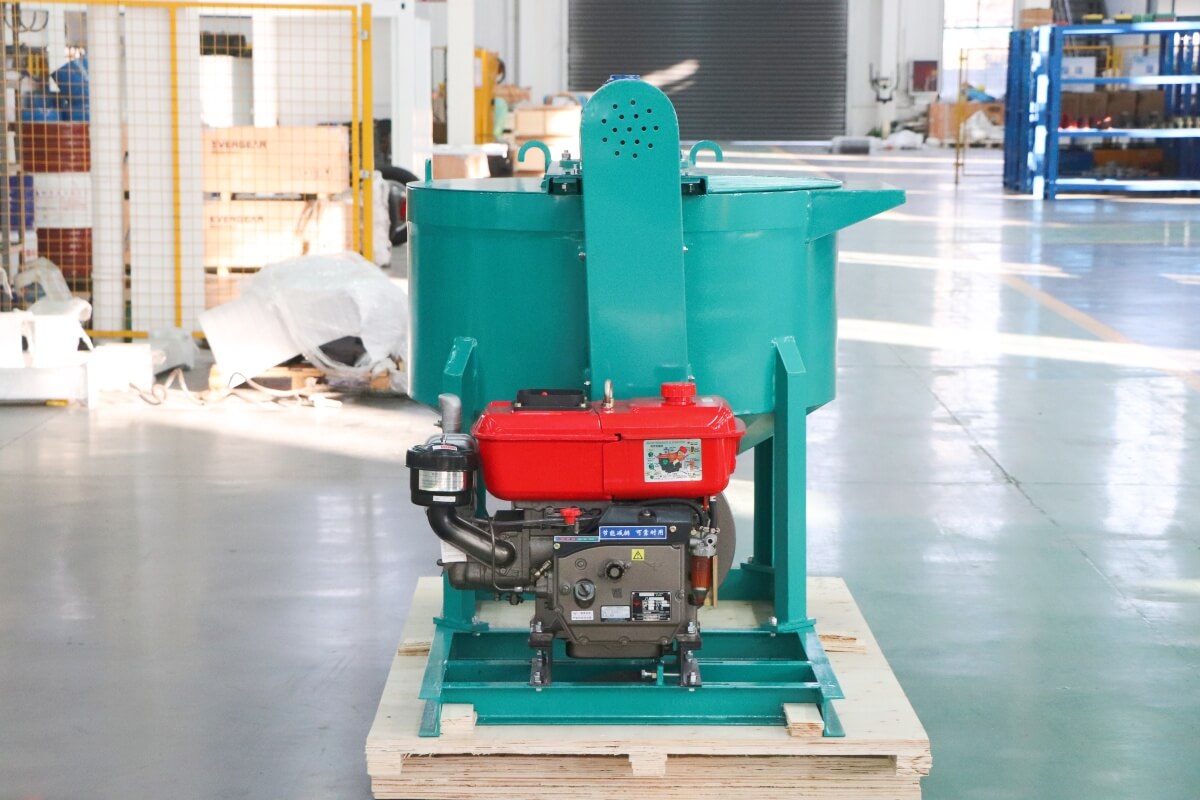
Currently, mixer machines commonly used in projects are primarily categorized into three types:1. Paddle Mixers: Low-speed (300-500 rpm), featuring simple structure and low cost. Suitable for small-scale projects or low-demand scenarios, but exhibit poor mixing uniformity and lower efficiency.
2. Colloid Grout Mixer: Medium-speed (800-1200 rpm), utilize colloid grinding to refine particles, suitable for specialty slurry preparation, but have limited output capacity and complex maintenance;3. High-speed diesel cement grout mixers: High-speed operation (1500-3000 rpm), diesel-powered, offering high-efficiency mixing, large capacity, and strong mobility, making them ideal for industrial-scale projects.
For cement slurry preparation, the high-speed diesel model offers unparalleled advantages:1. Superior Homogeneity: Powerful vortex mixing technology ensures thorough dispersion of cement particles, achieving slurry uniformity exceeding 95% and preventing localized overconcentration that compromises reinforcement effectiveness.2. Superior Pumpability: Uniform slurry flow reduces grout pump clogging risks, enhancing construction continuity;3. Reduced Material Waste: Uniform mixing prevents material loss due to clumping, increasing material utilization by 10-15%;4. High Adaptability: Independent of power grids, enabling unrestricted operation in remote areas and field projects without environmental constraints.
Model selection should focus on three core factors:1. Project scale: Small-scale projects (e.g., house foundation grouting) may use batch-type units under 1m³ capacity; large-scale projects (e.g., tunnels, dams) require continuous- operation units over 2m³ capacity, with output matching grouting pump flow rates;2. Operating Environment: Electric models may be considered in urban grid-covered areas, but diesel-powered models are mandatory for remote mountainous regions, mines, and field projects.3. Mobility Requirements: For cross-site operations, choose trailer-mounted diesel grouting machines equipped with towing devices for road transport. For fixed-site operations, opt for skid-mounted models for easy installation.
Advantages:
• Low operating costs: Electricity rates are lower than diesel fuel prices, offering long-term energy cost advantages;
• Low noise and pollution: Zero exhaust emissions, suitable for urban areas and indoor projects;• Simple Maintenance: Motors feature straightforward construction with low failure rates and minimal upkeep costs.
Disadvantages:
• Grid Dependency: Requires access to a stable power source; cannot operate in environments without electricity;• Insufficient torque: Starting torque is lower than diesel engines, leading to power shortages under heavy loads;• Limited mobility: Restricted by power cords, fixed operating range, and inflexible positioning.Suitable Scenarios: Urban construction, indoor projects, small fixed-site operations with stable power supply.
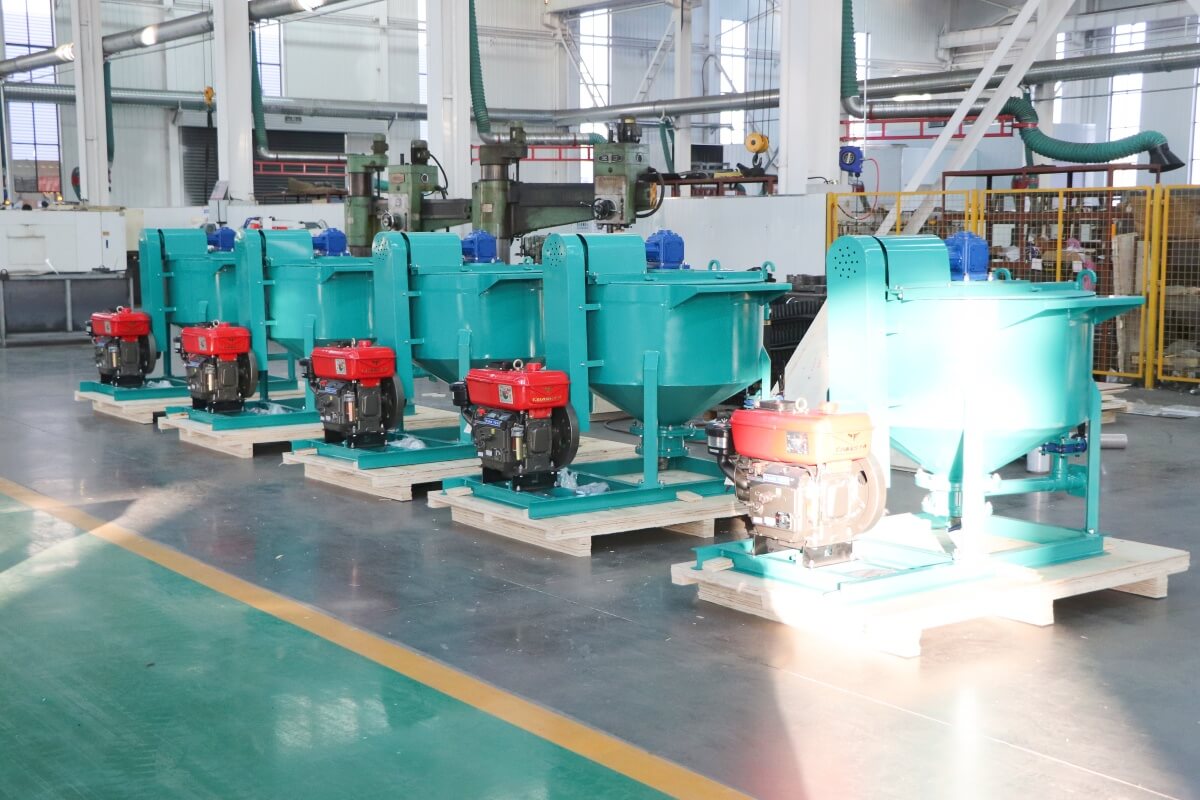
1. Self-Contained Power: Equipped with a diesel engine, eliminating the need for external power sources and enabling operation in all scenarios;2. Robust Power: High-torque diesel engine delivers rapid startup and handles heavy loads with extended continuous operation;3. Environmental Adaptability: Resistant to high temperatures, low temperatures, humidity, and dust, ensuring stable operation between -20°C and 45°C;4. Mobile Flexibility: Equipped with a trailer chassis for rapid relocation between work sites, ideal for multi-site overlapping construction.
| Comparison Dimension | Electric Cement Grout Mixer Machine | Diesel Cement Grout Mixer Machine |
| Power Source | Grid Power Supply | Diesel Engine |
| Operating Cost | Low (electricity rates are inexpensive) | Moderate (higher diesel fuel costs) |
| Power Performance | Low torque, weak heavy- load capability | High torque, strong heavy-load capability |
| Mobility | Poor (restricted by power cord) | Excellent (trailer- mounted design, flexible transport) |
| Environmental adaptability | Limited to grid coverage and clean environments | Full-scenario adaptability, withstands harsh conditions |
| Maintenance Cost | Low (simple motor structure) | Moderate (requires regular engine maintenance) |
| Applicable projects | Small-scale urban projects, fixed-site operations | Remote projects, large- scale projects, multi-site operations |
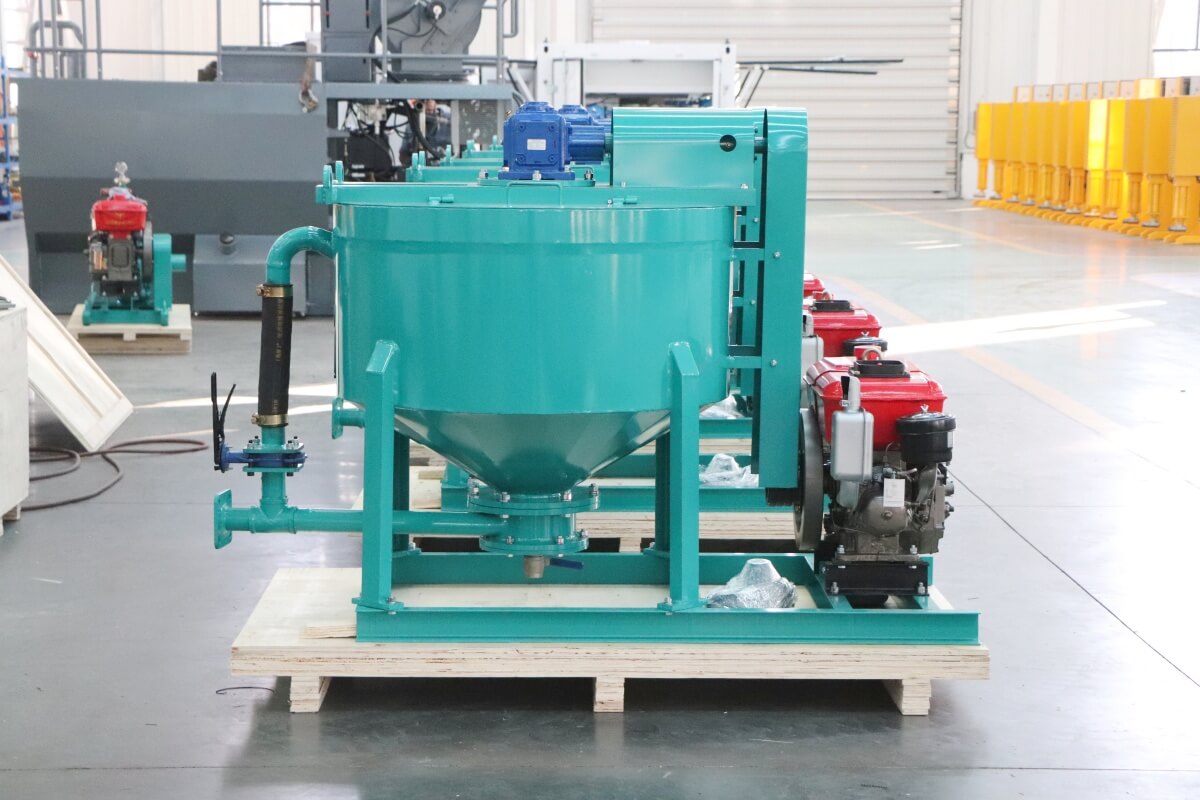
In scenarios without stable grid coverage—such as mountain road construction, bridge building in remote areas, and open-pit mining—diesel-powered slurry mixers are the only viable option. For example:• Tunnel excavation projects in western mountainous regions: Construction sites are remote from towns and cannot access industrial power supply. Diesel slurry mixers can independently complete slurry preparation tasks.• Desert solar power station foundation reinforcement: Remote locations with no power infrastructure allow diesel models to operate mobile alongside construction crews.
For large-scale projects like tunnels, dams, and highways requiring prolonged continuous grouting, diesel grouting machines demonstrate superior continuous operation and high- capacity advantages:• Long-span tunnel grouting: Requires 24-hour uninterrupted slurry production; diesel models can operate continuously for over 10 hours without frequent shutdowns;• River-spanning bridge foundation reinforcement: With grouting volumes reaching thousands of cubic meters, high-capacity diesel grouting machines can meet grouting pump demands, preventing construction interruptions.
In high-temperature, high-humidity, dusty, and highly corrosive environments, diesel grouting machines demonstrate far superior durability compared to electric models:
• Coastal slope protection: High humidity and salt spray environments can cause short circuits in electric equipment. Diesel models feature superior sealing and corrosion resistance.• Mine shaft grouting: Heavy dust and poor ventilation conditions—diesel engines feature dust-resistant designs for stable operation.
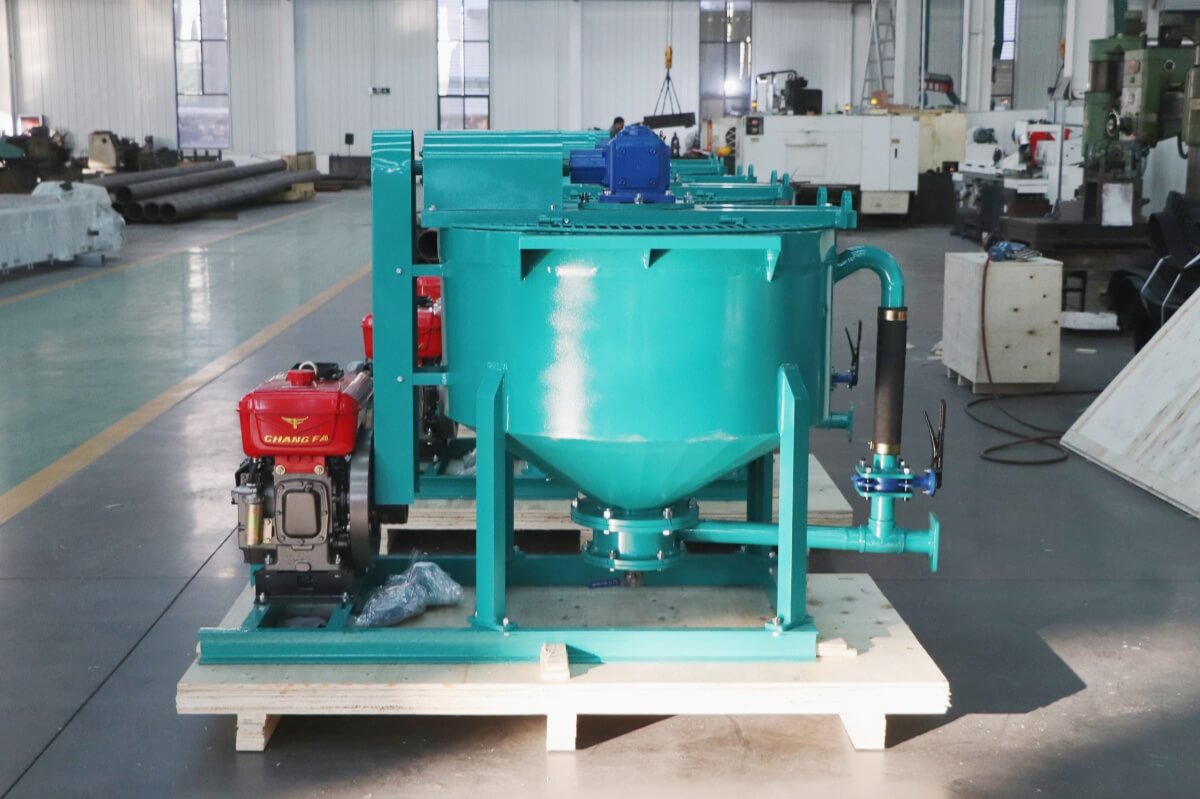
(1) Pre-startup Inspection
• Check diesel fuel tank level to ensure sufficient supply for operations;• Check coolant and lubricant levels, replenish if low;• Verify the mixing tank is clean and free of residual debris;• Inspect electrical circuits and piping connections for secure fastening and absence of leaks.
(2) Operational Procedures
• Add materials in the sequence "water first, powder second, additives last" to prevent cement powder clumping;• Start the engine and gradually adjust the speed to the set value (1500-2500 rpm). Monitor the slurry condition during mixing.• Control mixing time according to project requirements, typically 3-8 minutes, to ensure slurry uniformity meets standards;• Coordinate discharge with the grouting pump to control flow rate, preventing overflow or insufficient supply.
(3) Post-Operation Procedures
• Shut off the engine and clean residual slurry from the mixing tank walls to prevent solidification and clumping;• Clean the inlet, outlet, and piping to prevent blockages;• Inspect equipment components for wear or leaks, addressing any abnormalities promptly;• For long-term storage, drain fuel and coolant tanks and apply rust prevention measures.
• Power Stability: Diesel engine output power fluctuation is less than 5%, ensuring stable mixing speed and consistent slurry quality;
• Strong Continuous Operation: Capable of running continuously for 8-12 hours at full load to meet high-intensity construction demands;• Low Failure Rate: Industrial-grade core components offer wear resistance and fatigue endurance, achieving Mean Time Between Failures (MTBF) exceeding 800 hours;• User-Friendly Operation: Integrated control panel with intuitive parameter adjustments; ordinary workers can operate after minimal training.
(1) Safety Operating Procedures
• Operators must wear safety helmets, protective gloves, dust masks, and other safety gear;• Do not open the mixing tank lid while the equipment is running to prevent injury from splashing slurry;• Overloading is strictly prohibited. Immediately shut down the equipment for inspection if abnormal vibrations or unusual noises are detected;• Regularly inspect safety devices (emergency stop button, overload protection) to ensure proper functionality.
(2) Daily Maintenance Checklist
• Daily Maintenance: Clean equipment surfaces, check oil levels, clear debris from feed inlet, inspect pipeline seals;
• Weekly Maintenance: Inspect impeller wear, tighten connections, clean air filter;
• Monthly Maintenance: Replace engine oil and oil filter, check belt tension, calibrate flow meter;
• Annual Maintenance: Overhaul the engine, replace worn components, and perform comprehensive rust prevention treatment.
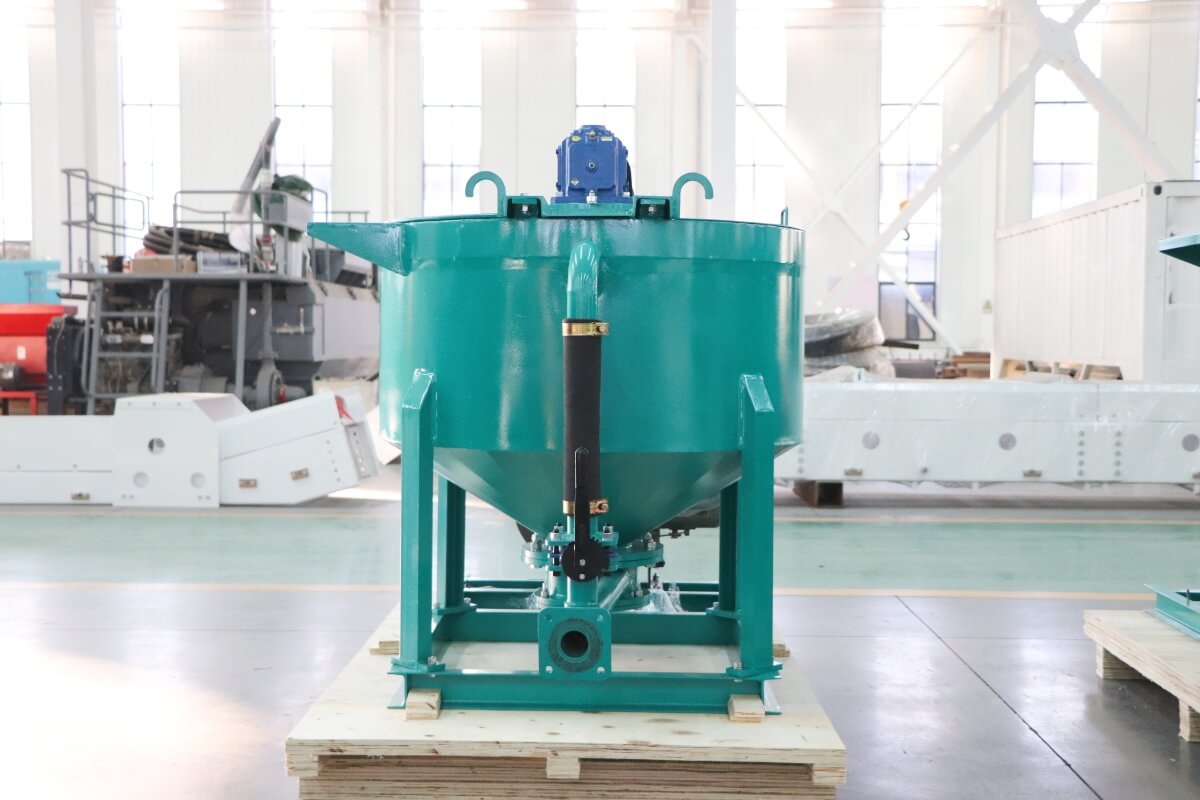
The intense shear force generated by the high-speed rotating impeller ensures thorough mixing of cement particles with water and additives. The slurry achieves uniformity exceeding 95%, effectively enhancing:• Structural Bonding Strength: Uniform slurry achieves thorough contact with surrounding rock and soil, boosting reinforcement effectiveness by 20-30%;• Construction Fluidity: Lump-free slurry flows smoothly through grouting pumps, preventing construction interruptions caused by equipment blockages;
• Project Pass Rate: Consistent slurry quality reduces rework risks, significantly increasing first-time project acceptance rates.
Diesel-powered grouting machines typically feature trailer-mounted or skid-mounted designs with towing equipment and tires, offering three key mobility advantages:• Effortless site-to-site transfer: Rapid relocation between job sites via road transport without disassembly;• Flexible on-site adjustment: Operating positions can be adjusted at any time according to construction needs without relying on fixed power interfaces;• Rapid deployment: Installation and commissioning can be completed within 30 minutes upon arrival at the site, enabling immediate operation.
Although diesel grout mixer machines have higher initial procurement costs than electric models, they offer greater long-term cost advantages:• Reduced labor costs: Automated operation eliminates manual stirring requirements, saving 2-3 operators per unit;• Reduced downtime: High durability and low failure rate ensure annual maintenance downtime does not exceed 20 hours;• High residual value: Long service life of diesel engines and core components, with residual values exceeding 40% after 5 years, ensuring high resale value.
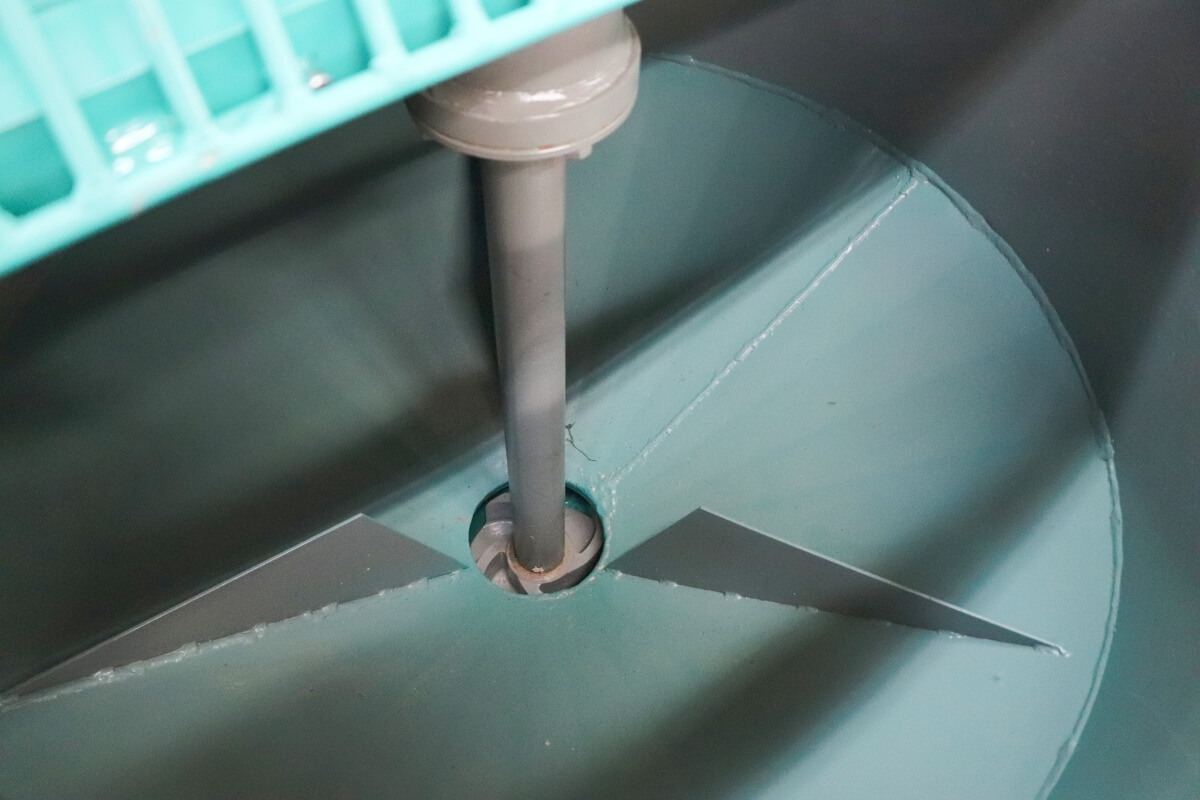
• Tunnel Engineering: Grouting reinforcement of surrounding rock in shield tunnels and mining tunnels to prevent cave-ins and water seepage;• Bridge Engineering: Reinforcement of bridge pile foundations, bearing grouting, expansion joint filling to enhance structural stability;• Dams and Water Conservancy Projects: Grouting for dam seepage prevention and reservoir foundation reinforcement to enhance impermeability;• Highway and Railway Engineering: Subgrade settlement treatment, pavement crack repair, slope protection grouting.
• Mining operations: Grouting for mine tunnel support and backfilling of abandoned mine areas to ensure mining safety;• Geological hazard mitigation: Foundation treatment in karst regions and fault reinforcement to prevent geological disasters;• Underground Engineering: Reinforcement of underground utility tunnels and subway station excavation pits to control deformation.
• Soil Stabilization: Remediation of contaminated soil, reinforcement of soft soil foundations, and improvement of soil mechanical properties;• Slope Protection: Grouting for highway/railway slopes and riverbank slopes to prevent soil erosion and landslides;• Wetland and Coastal Protection: Ecological restoration of wetlands, reinforcement of coastal embankments to enhance erosion resistance.
• Disaster Recovery: Reinforcing buildings and repairing roads after earthquakes or floods to rapidly restore infrastructure functionality;• Emergency Leak Sealing: Emergency grouting to seal pipeline leaks and reservoir seepage, controlling disaster escalation;• Temporary Works: Rapid reinforcement of emergency shelters and temporary roads to ensure emergency access.
The investment return from purchasing a high-speed diesel grouting machine primarily stems from three aspects:1. Productivity Enhancement: Grouting efficiency is 10-15 times that of manual mixing, significantly shortening construction cycles. For tunnel projects, a 2m³/h diesel grouting machine can supply grout for 3-4 grouting pumps, boosting construction efficiency by over 50%;2. Material savings: Uniform mixing reduces material waste. At a cost of 800 yuan per cubic meter of cement slurry, annual construction volumes of 1000m³ can save 80,000-120,000 yuan in material costs;3. Labor Cost Reduction: Replacing 2-3 manual mixing workers, with an average annual salary of 60,000 yuan per worker, yields annual labor savings of 120,000-180,000 yuan.
Typically, the investment cost is recovered within 1-2 years after equipment deployment.
Leasing is suitable for:
• Short-term projects: Construction cycles under 6 months where purchasing equipment is uneconomical;• Occasional needs: Infrequent grouting operations with low equipment utilization rates;• Capital constraints: Limited initial investment budget unable to cover equipment procurement costs.
Suitable Scenarios for Purchase:
• Long-term projects: Construction cycles exceeding 1 year, or consistent grouting requirements;• High-frequency usage: Multiple concurrent job sites with high equipment utilization rates;• Customized Requirements: Projects with specific demands for grout mixer capacity or parameters that cannot be met by rental equipment.
(1) Core Technical Parameters Reference
| Parameter Type |
Key Metric |
Recommended Range |
| Production Capacity |
Batch / Continuous Capacity |
Batch: 0.5–3 m³, |
| Power System |
Engine Power |
15-50kW (matched to capacity) |
| Agitation Performance |
Impeller Speed, Mixing Uniformity |
1500-3000 rpm, ≥95% |
| Structural Design |
Tank capacity, mobility |
500–3000 L, trailer- mounted preferred |
| Safety features |
Protective devices, operational convenience |
Includes overload and low-oil-level alarms, |
 contacts
email:
sales@leadcrete.com
Phone/WhatsApp/Wechat:
86-18538591025
Import&Export Dept.:
86-371-63902781
fax:
86-371-63526676
address:
Xisihuan Ring-Road East, Tielu, Xiliu Lake sub-district, Zhongyuan District, Zhengzhou, Henan
China
Solution

Talking about the outstanding features of cast-in-place foam concrete

Cast-in-place foam concrete is a new type of engineering field material developed in recent years; it has the characteristics of light weight, good fluidity, strong durability, low cost and simple construction.
What’s the purpose of grouting?
The purpose or aims of grouting includes: 1. Seepage control; 2. Water plugging, 3. The consolidation; 4. To prevent landslide; 5. To reduce surface subsidence; 6. Improve the foundation bearing capacity; 7. Backfill; 8. Reinforcement.


 get in touch
Copyright Notice © 2014 Zhengzhou Lead Equipment Co.,Ltd. All rights reserved.Site Index Product Index
 +86-18538591025
 sales@leadcrete.com
 中文
中文 English
 Your Position:
  (Live chat)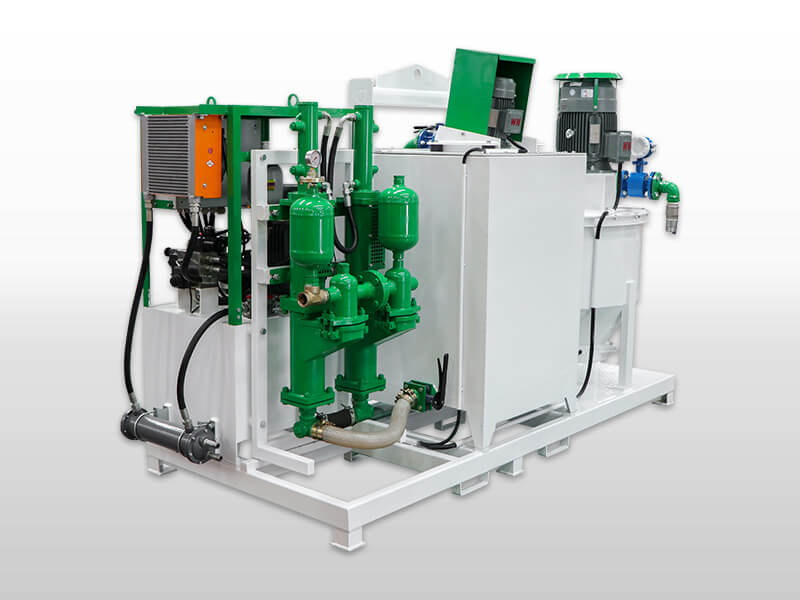

.jpg)
.jpg)
 Whatsapp