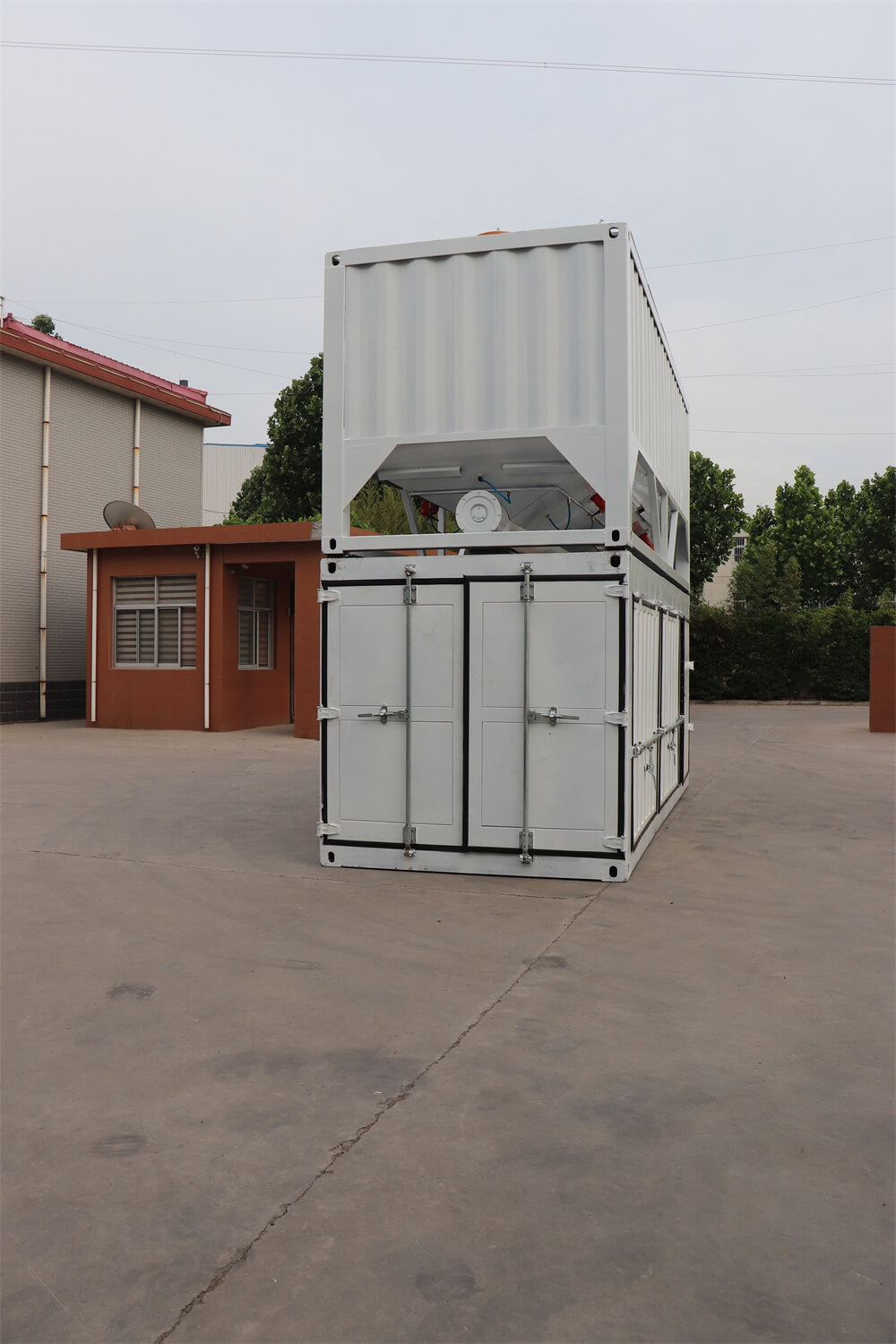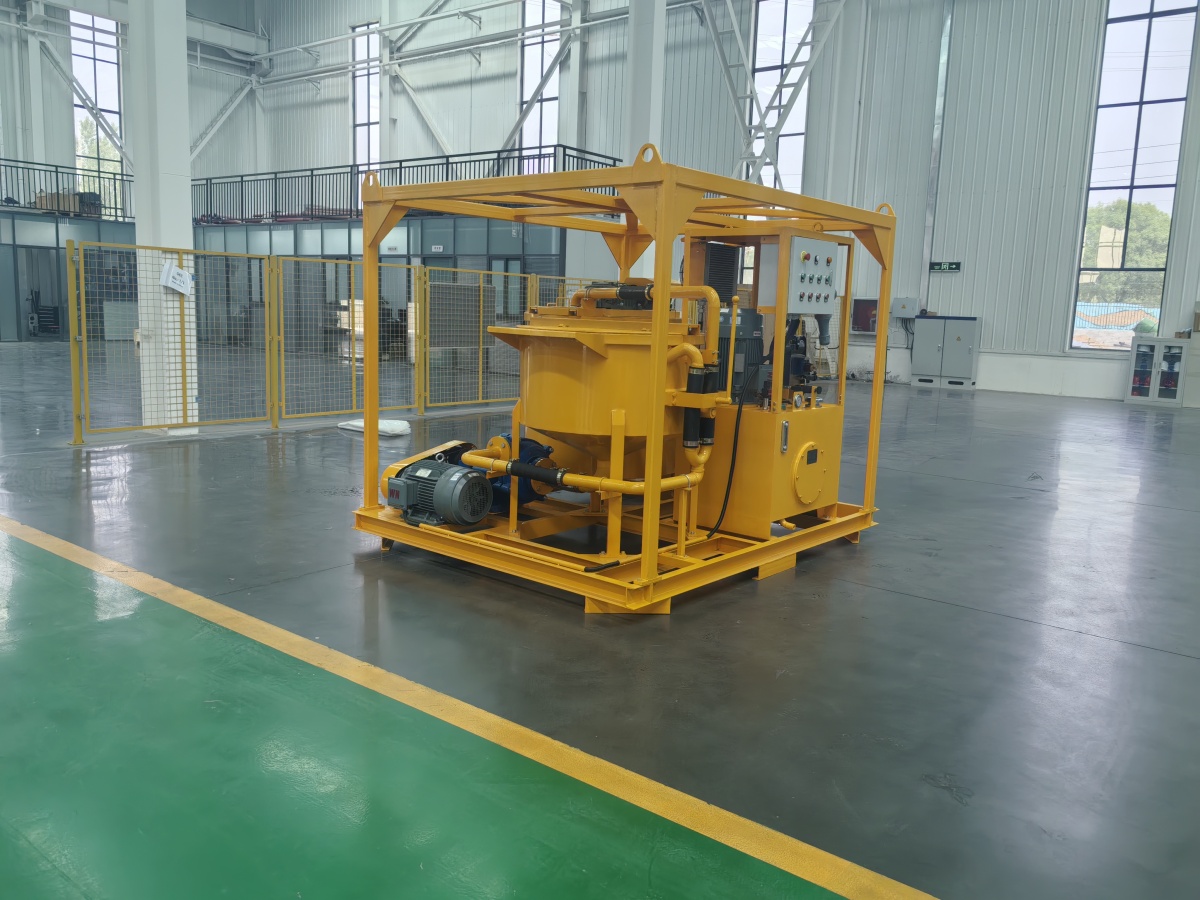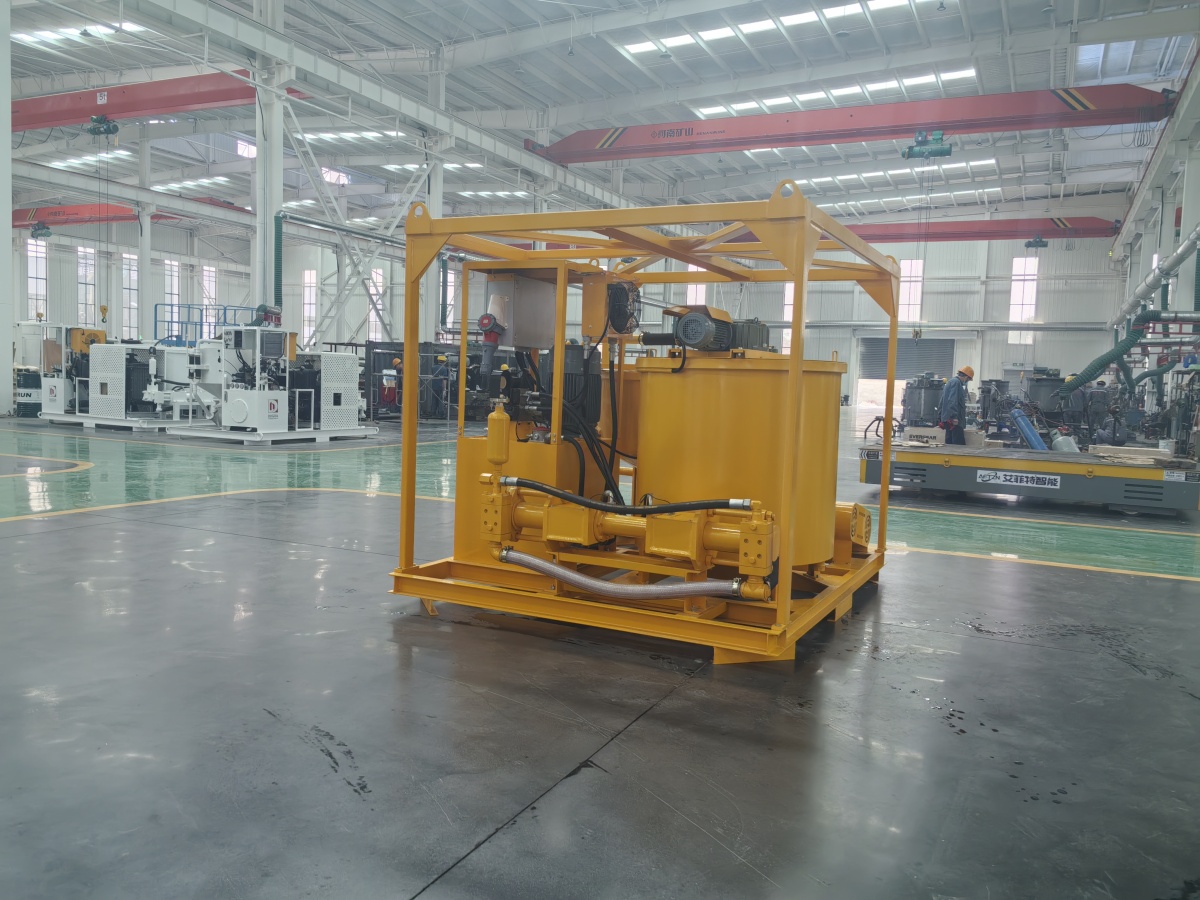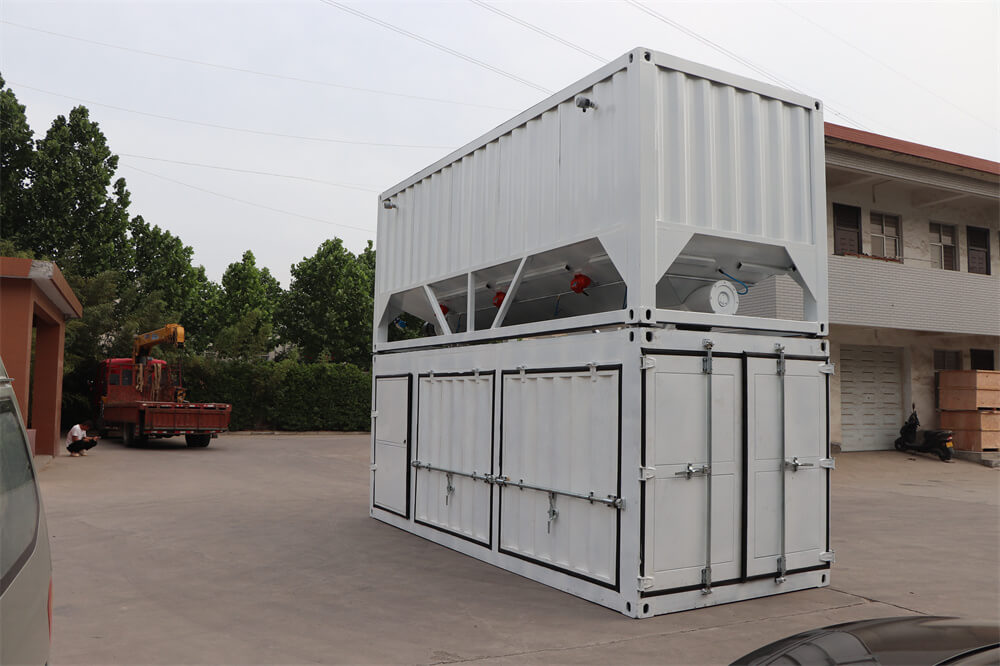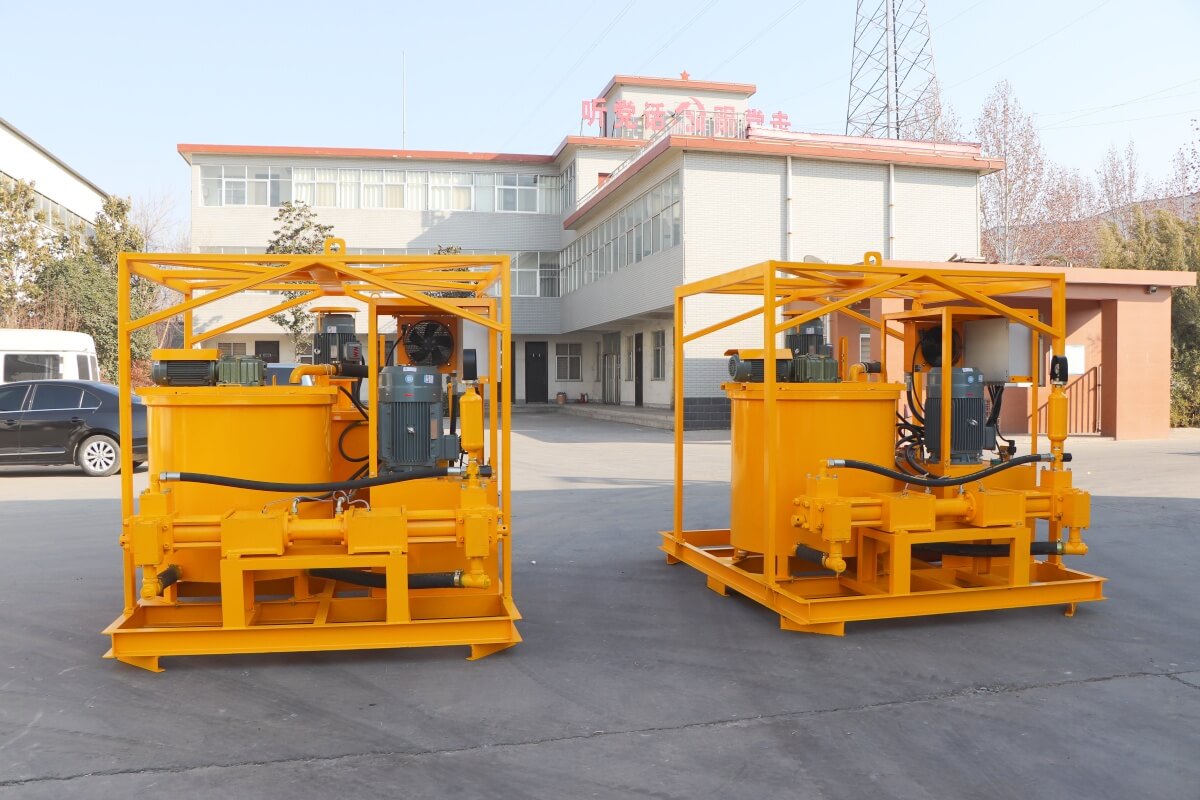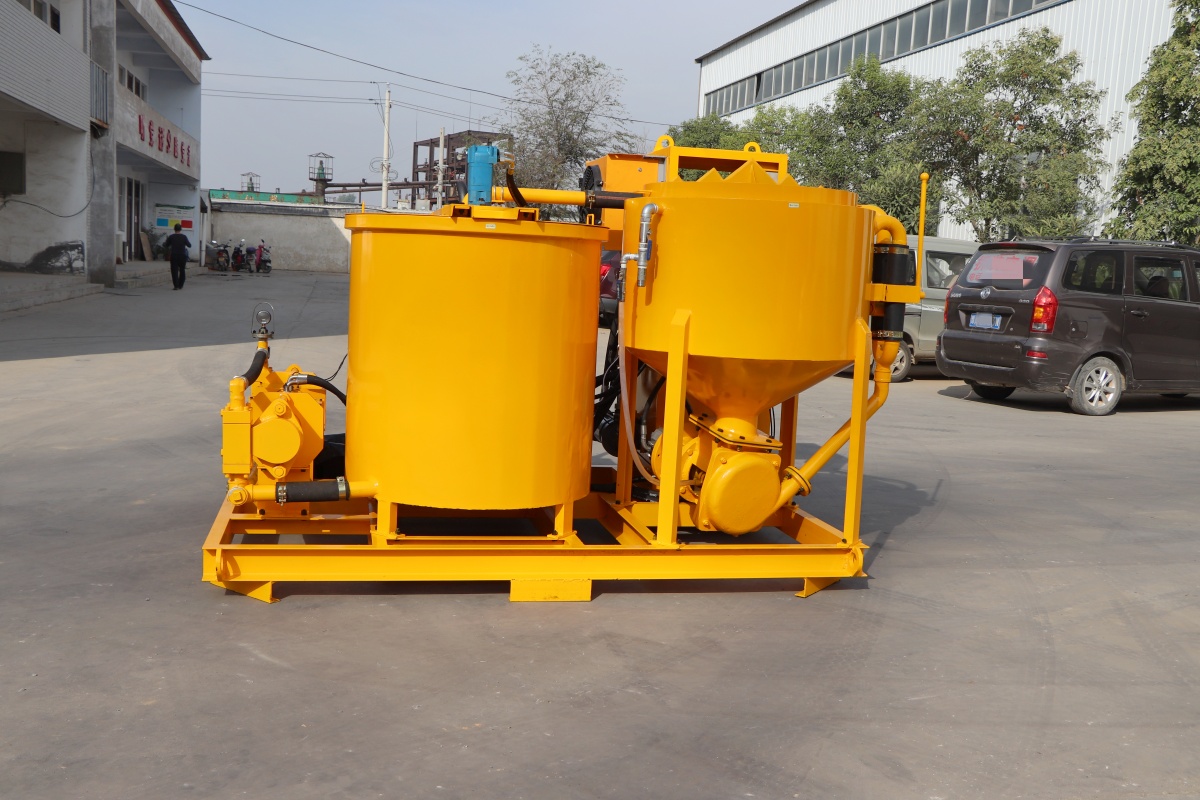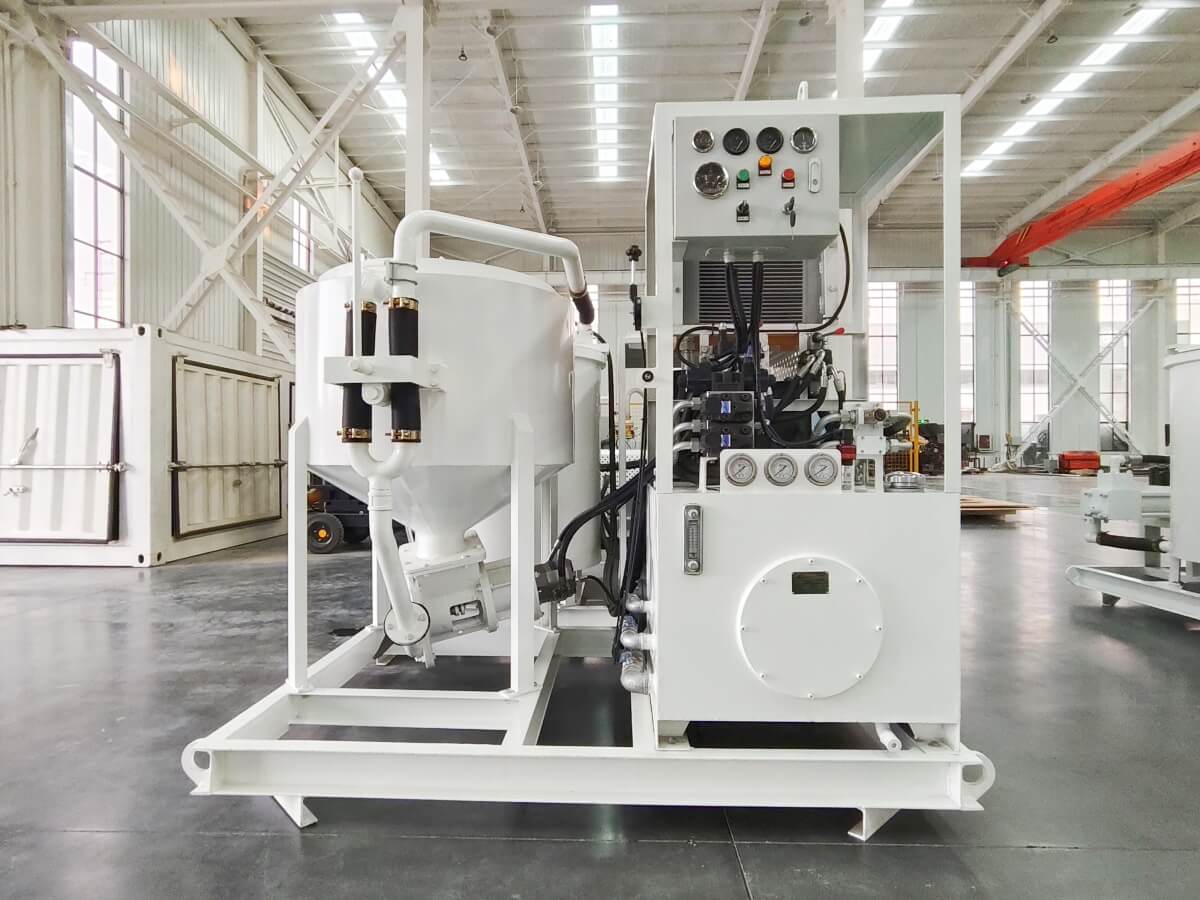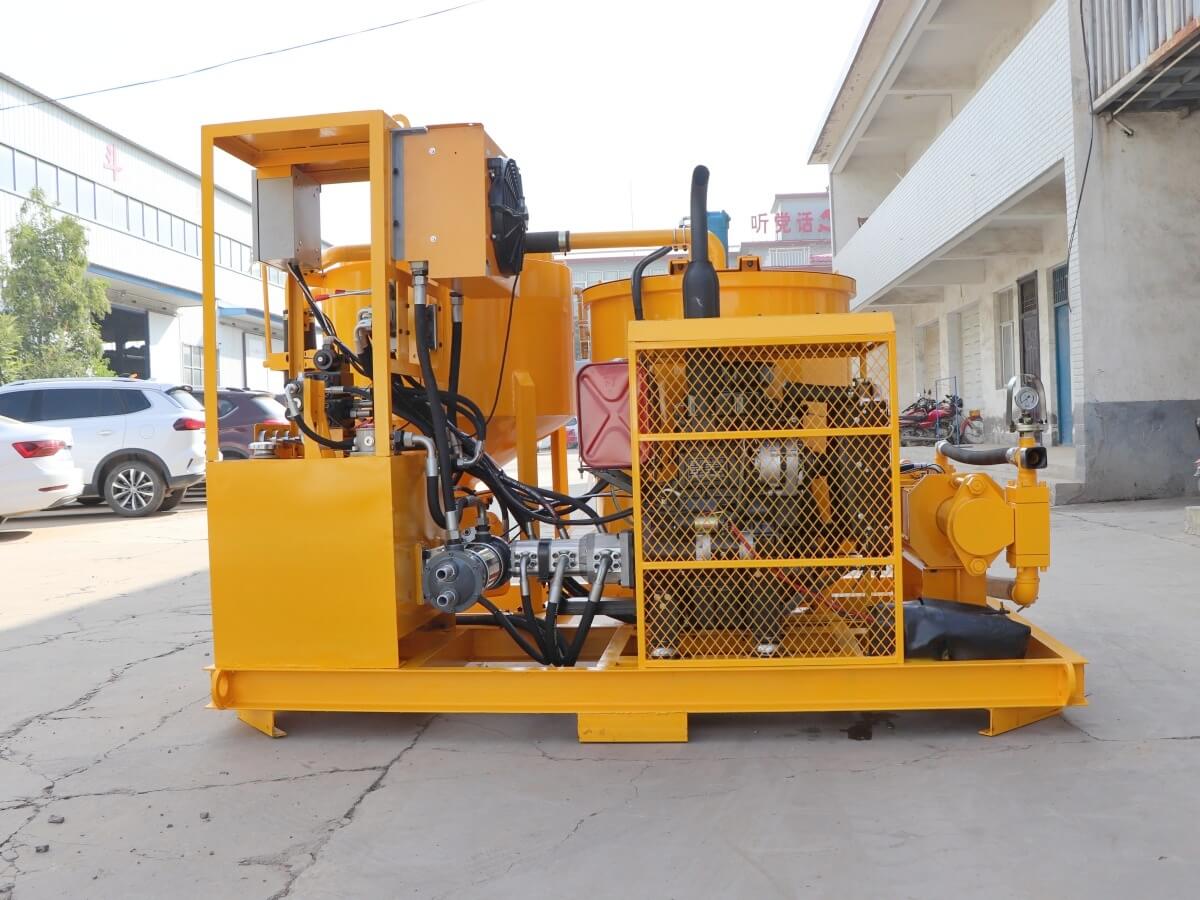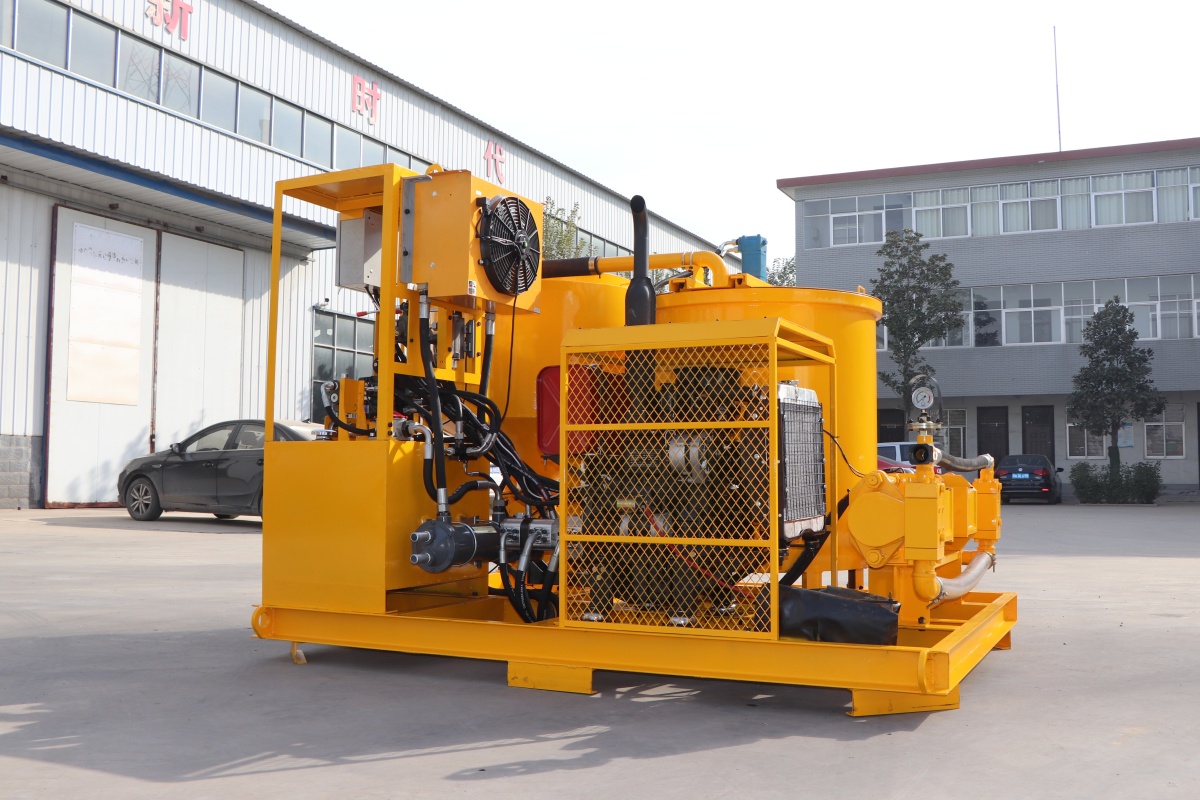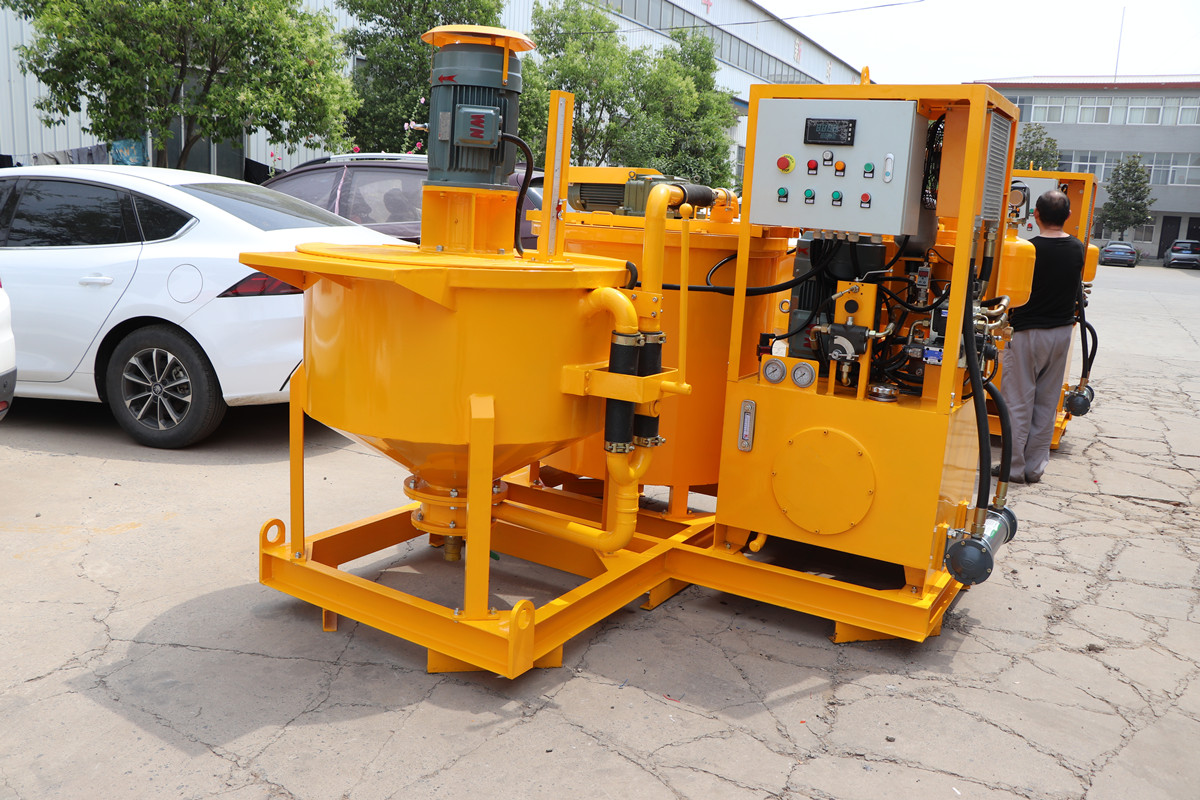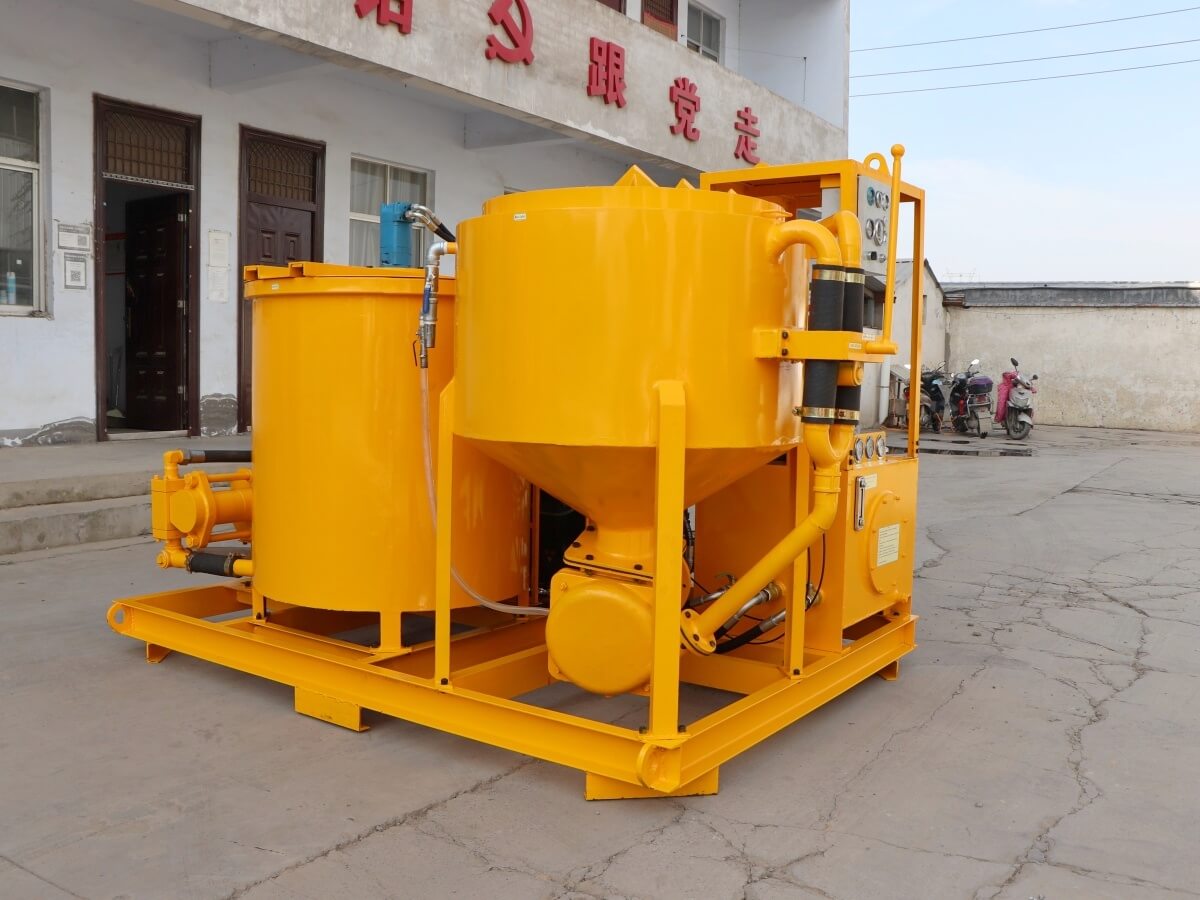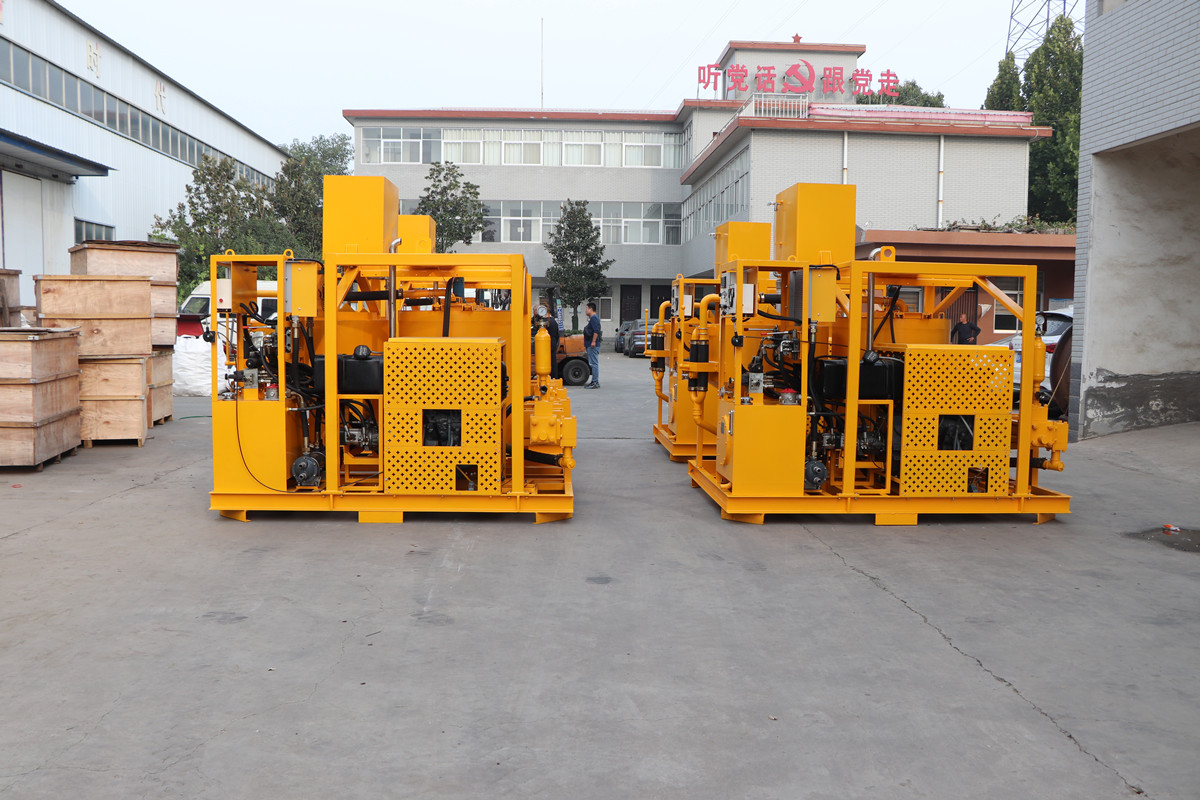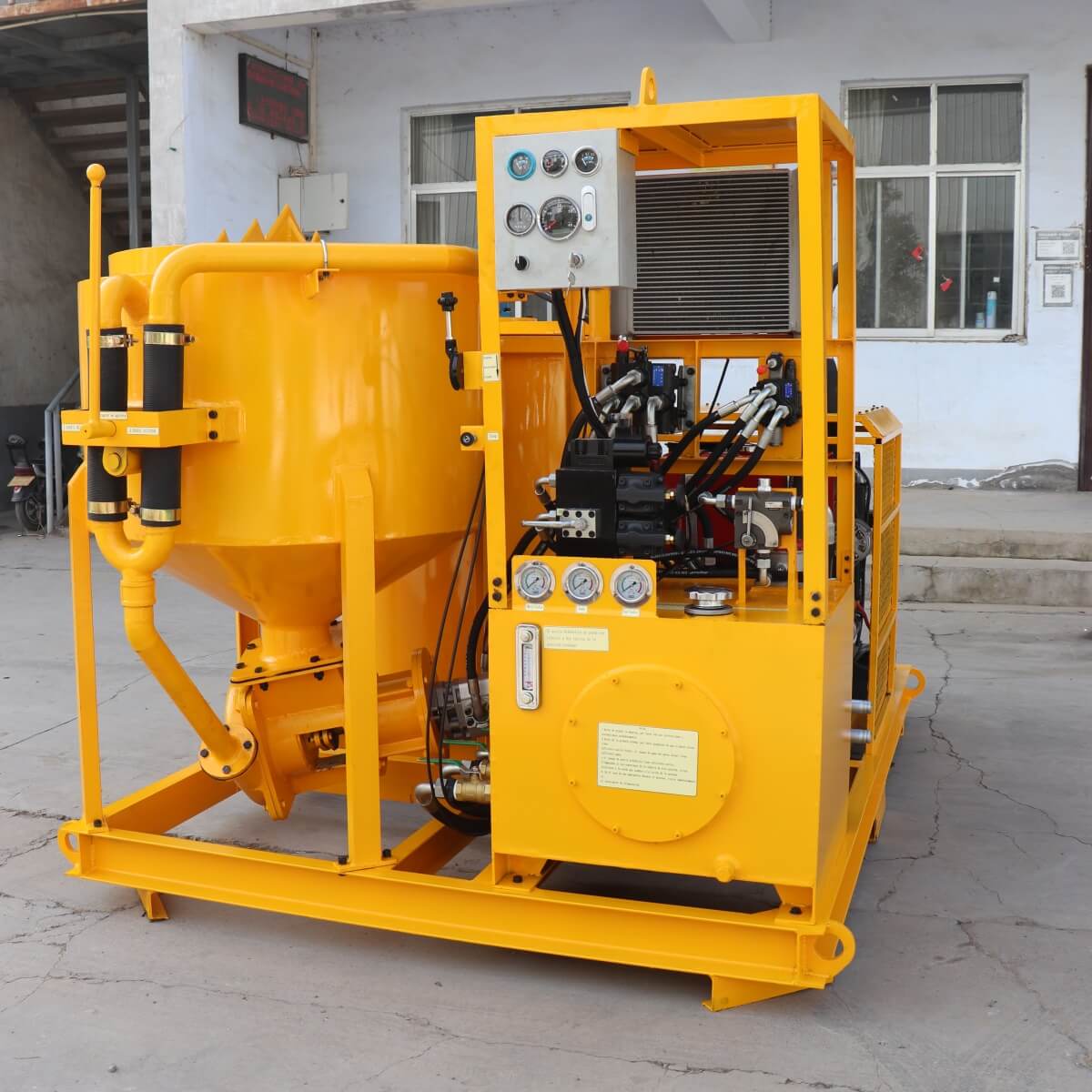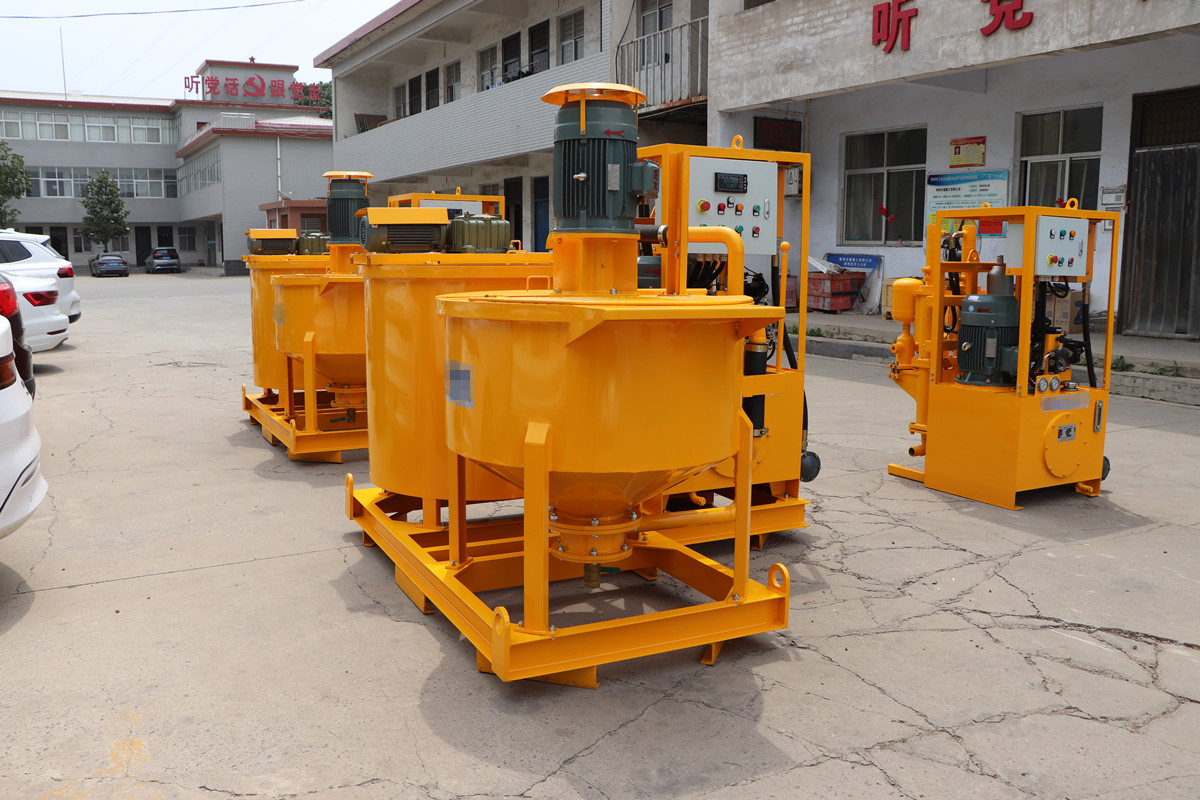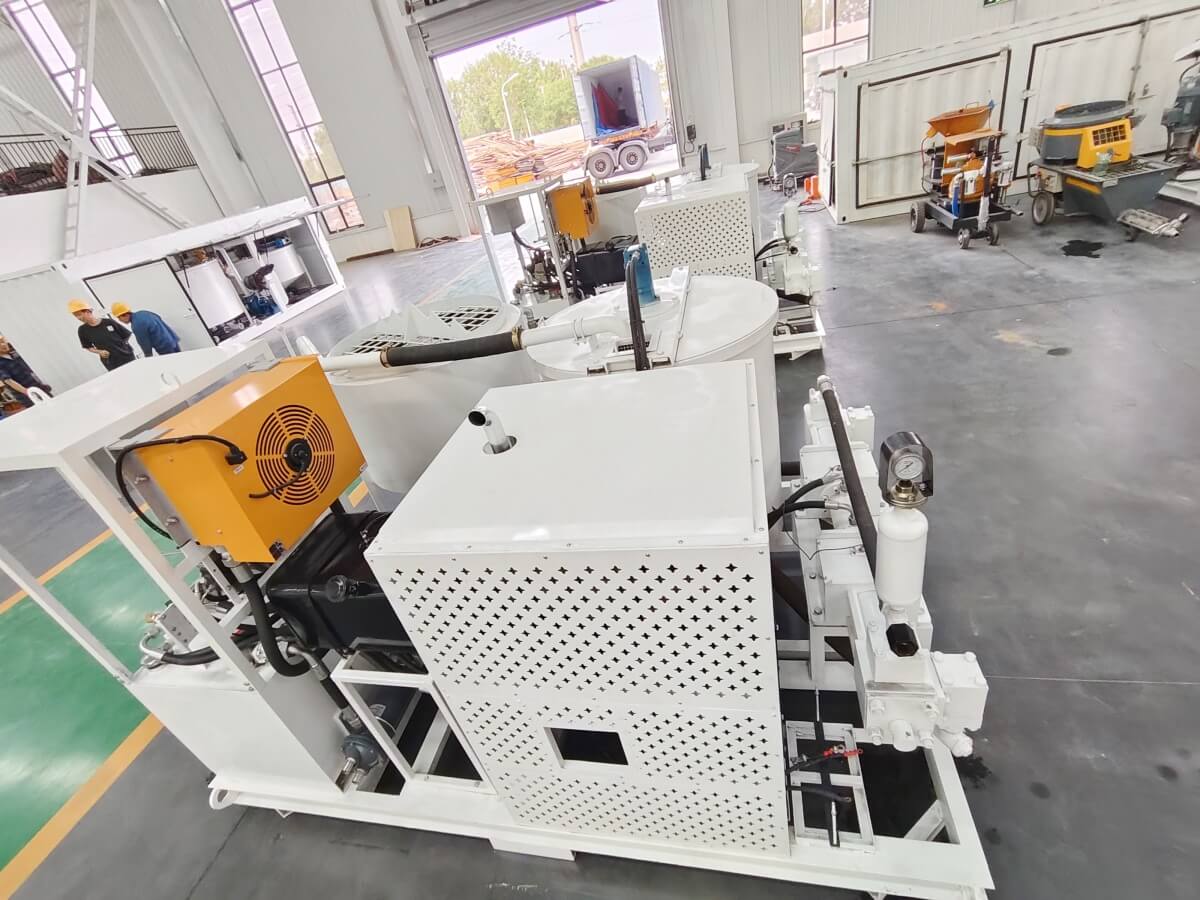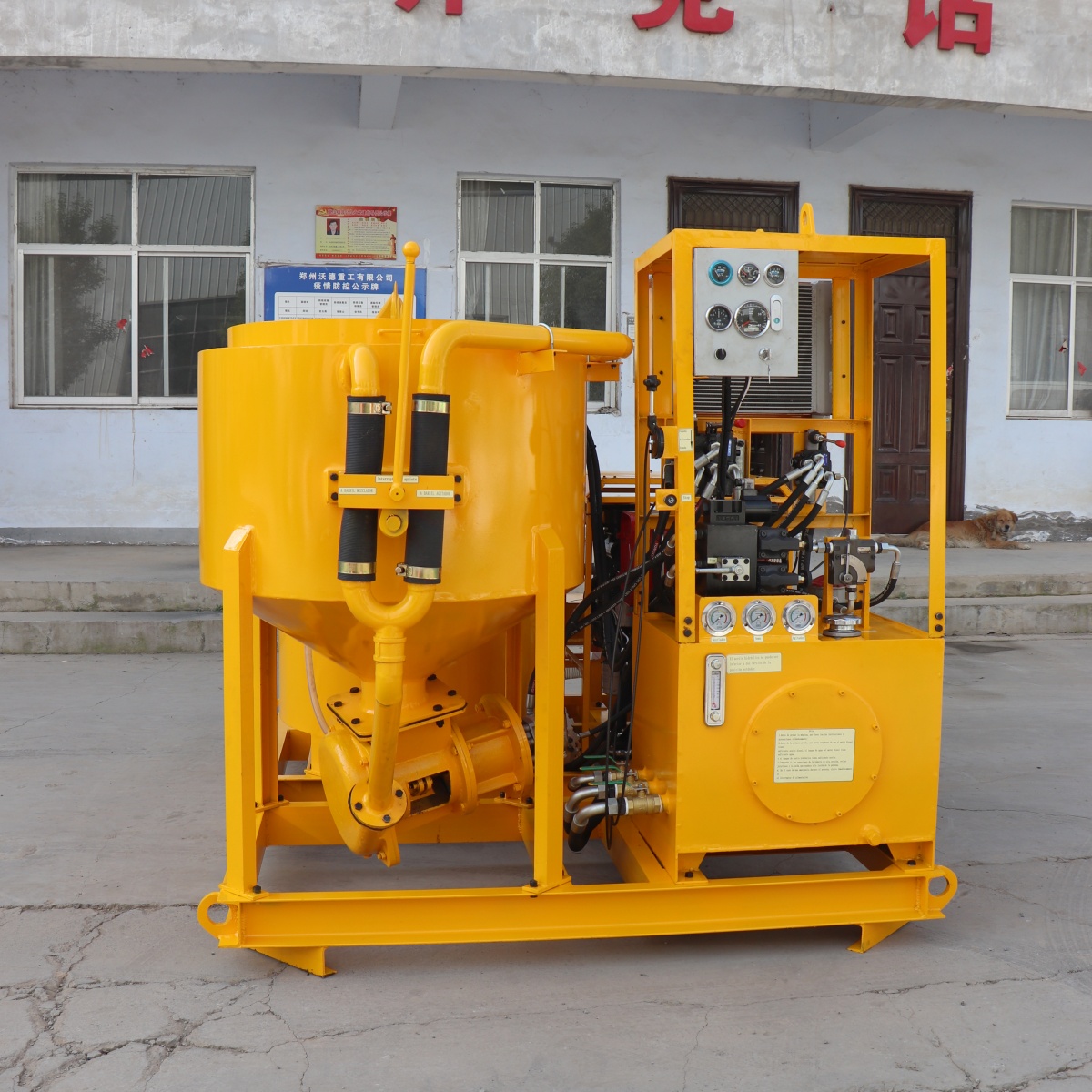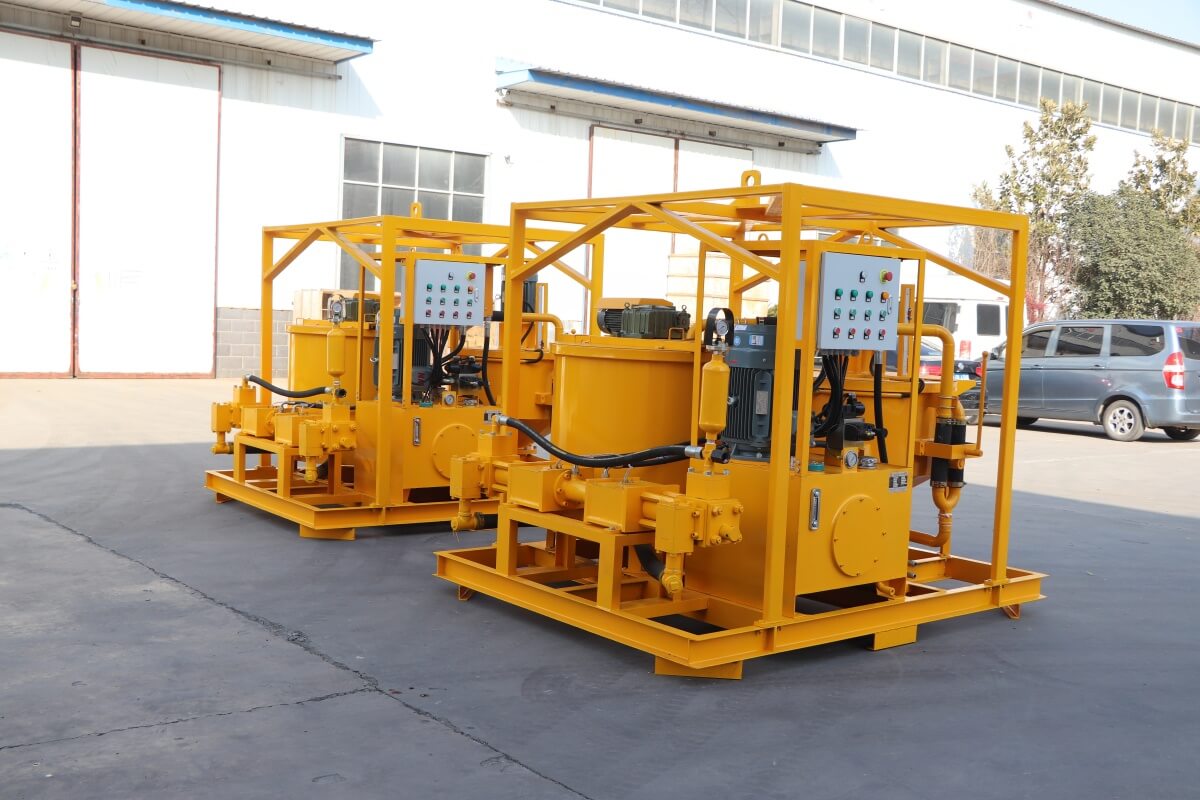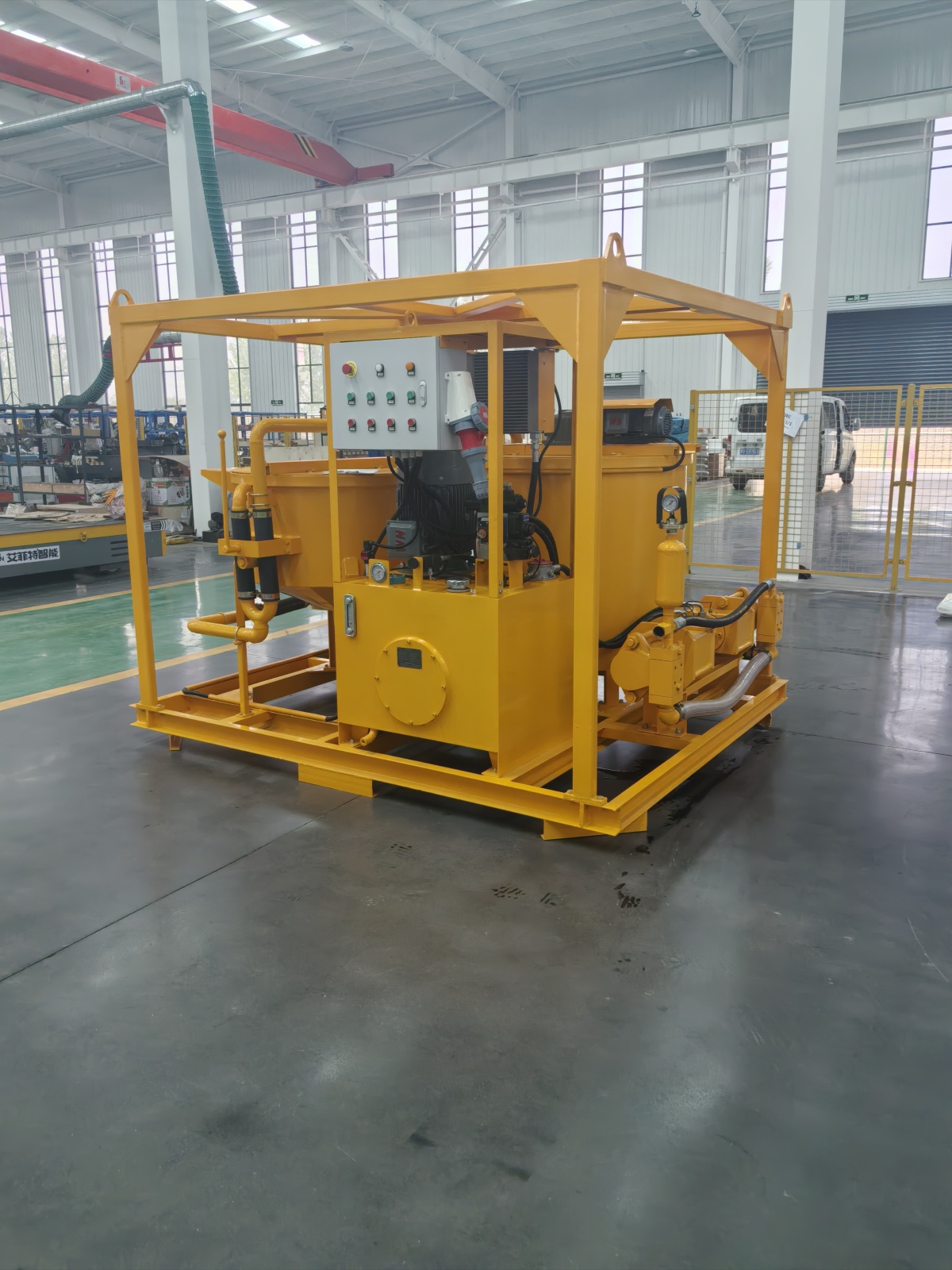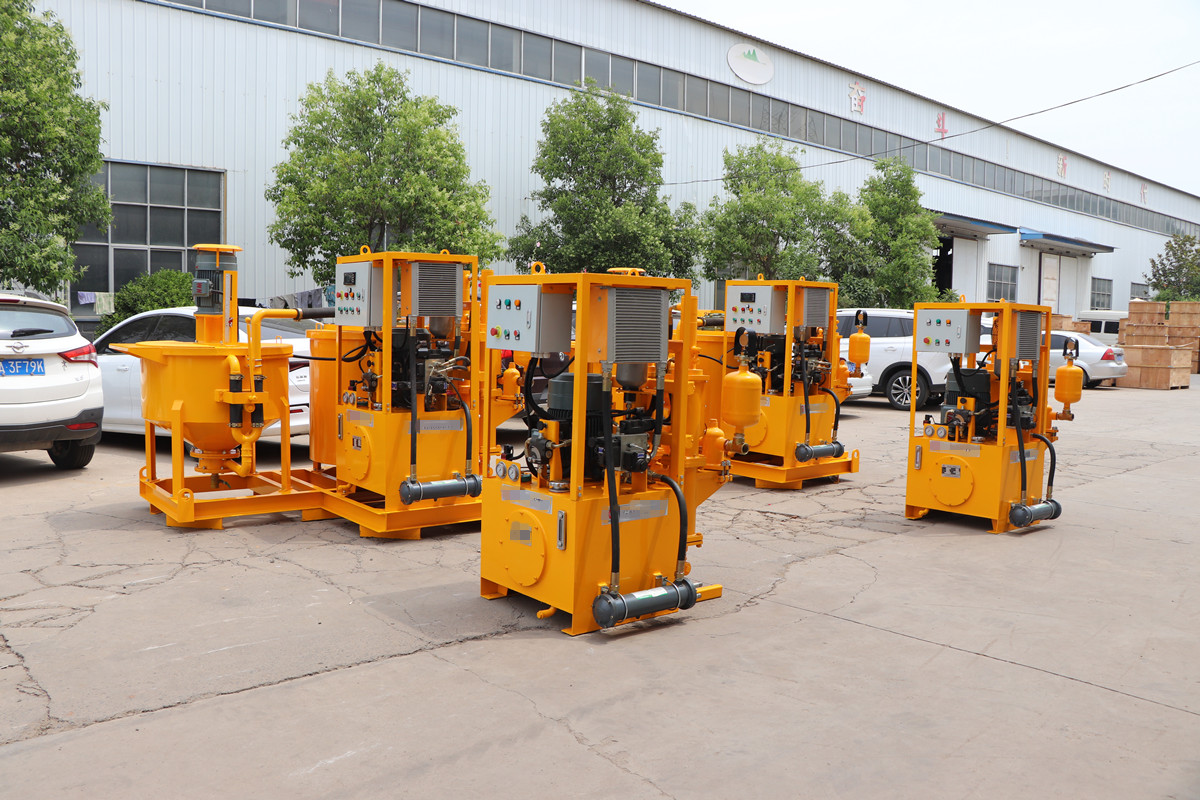
Grout station for tunnel project
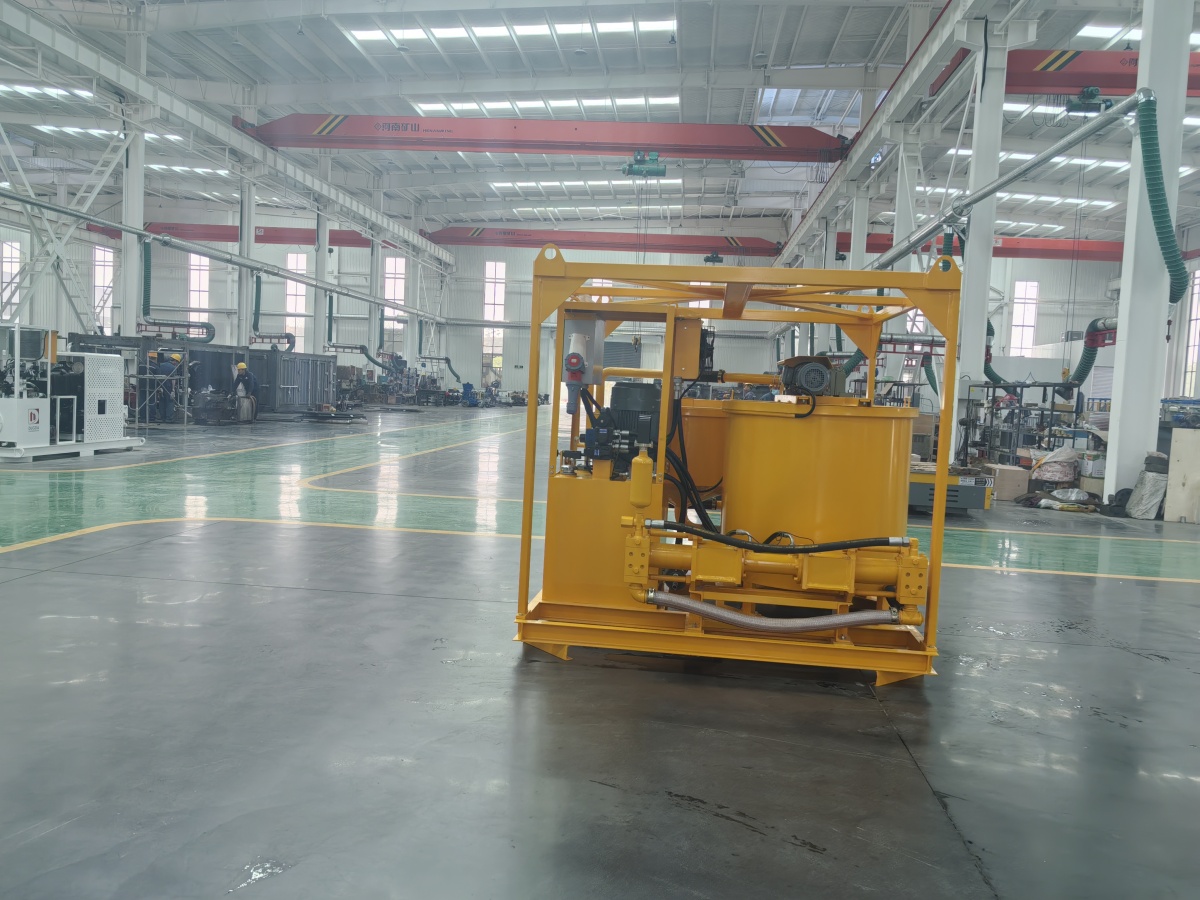
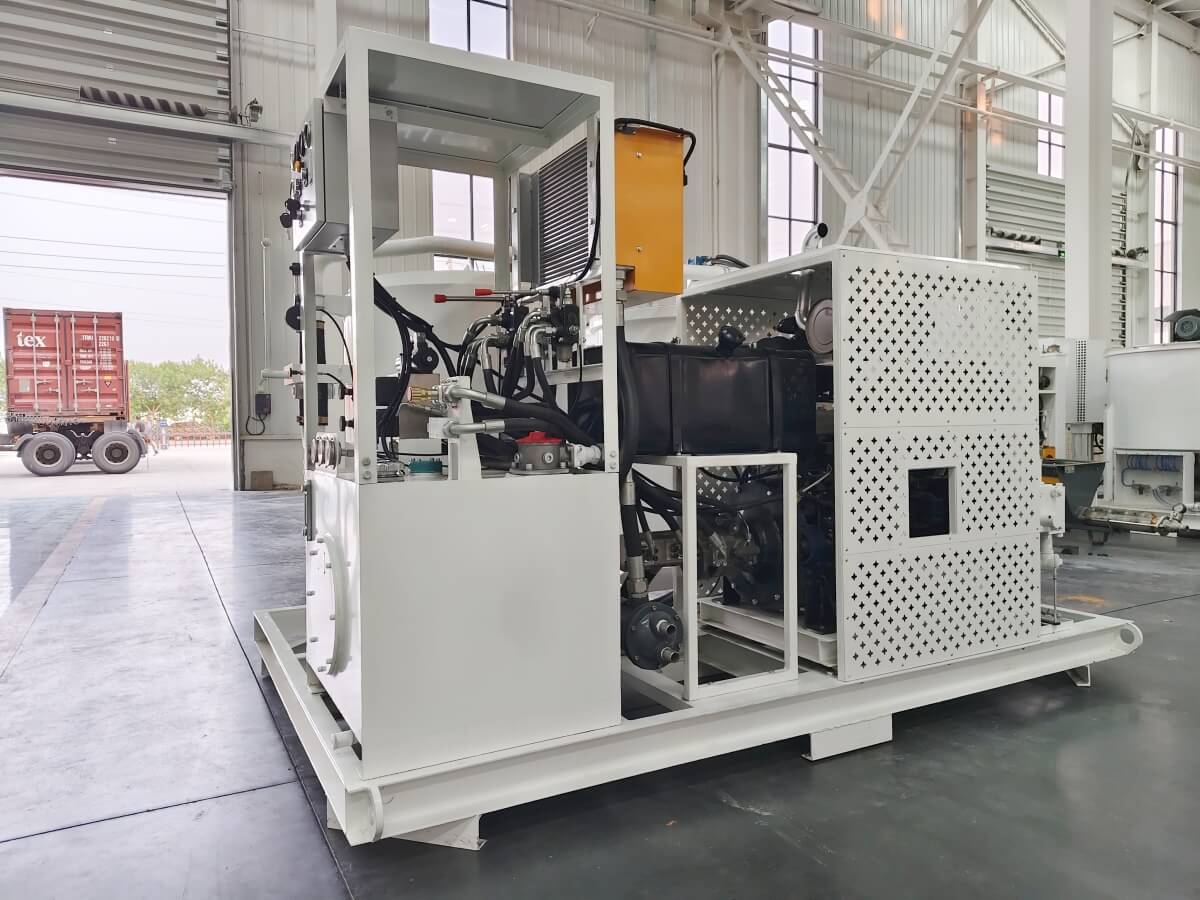
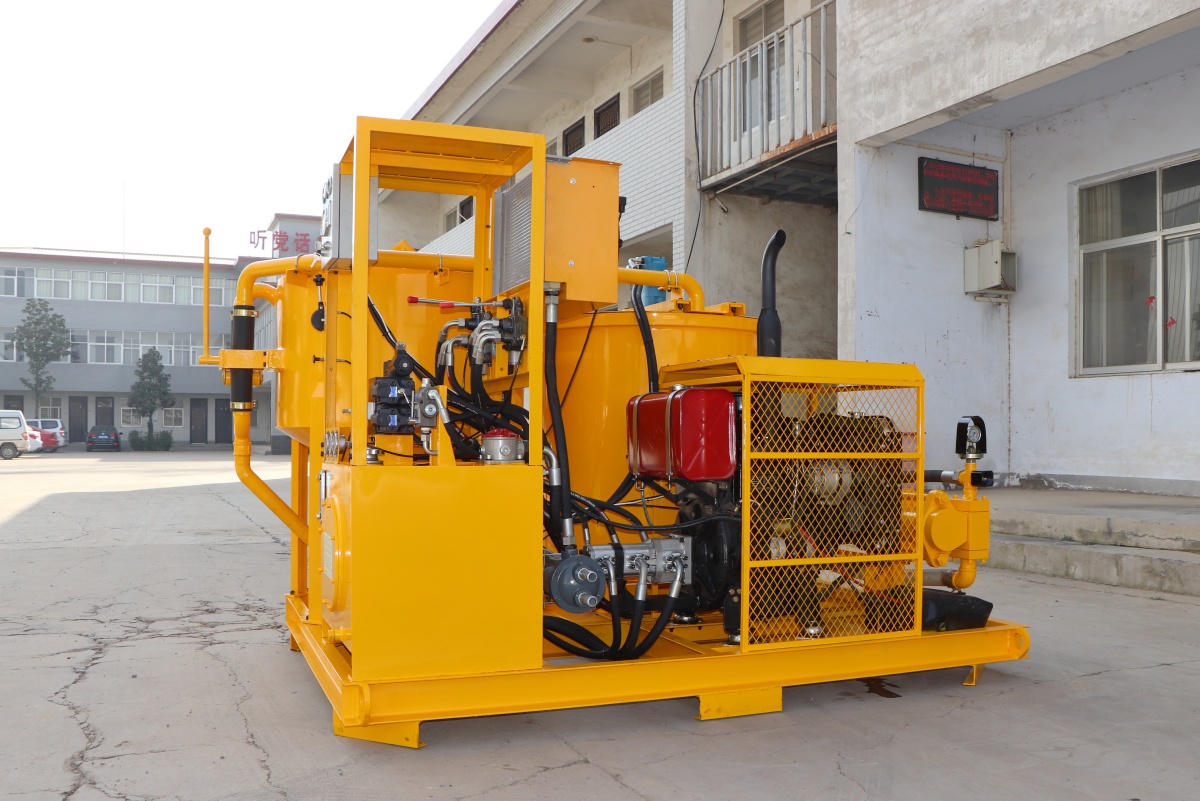
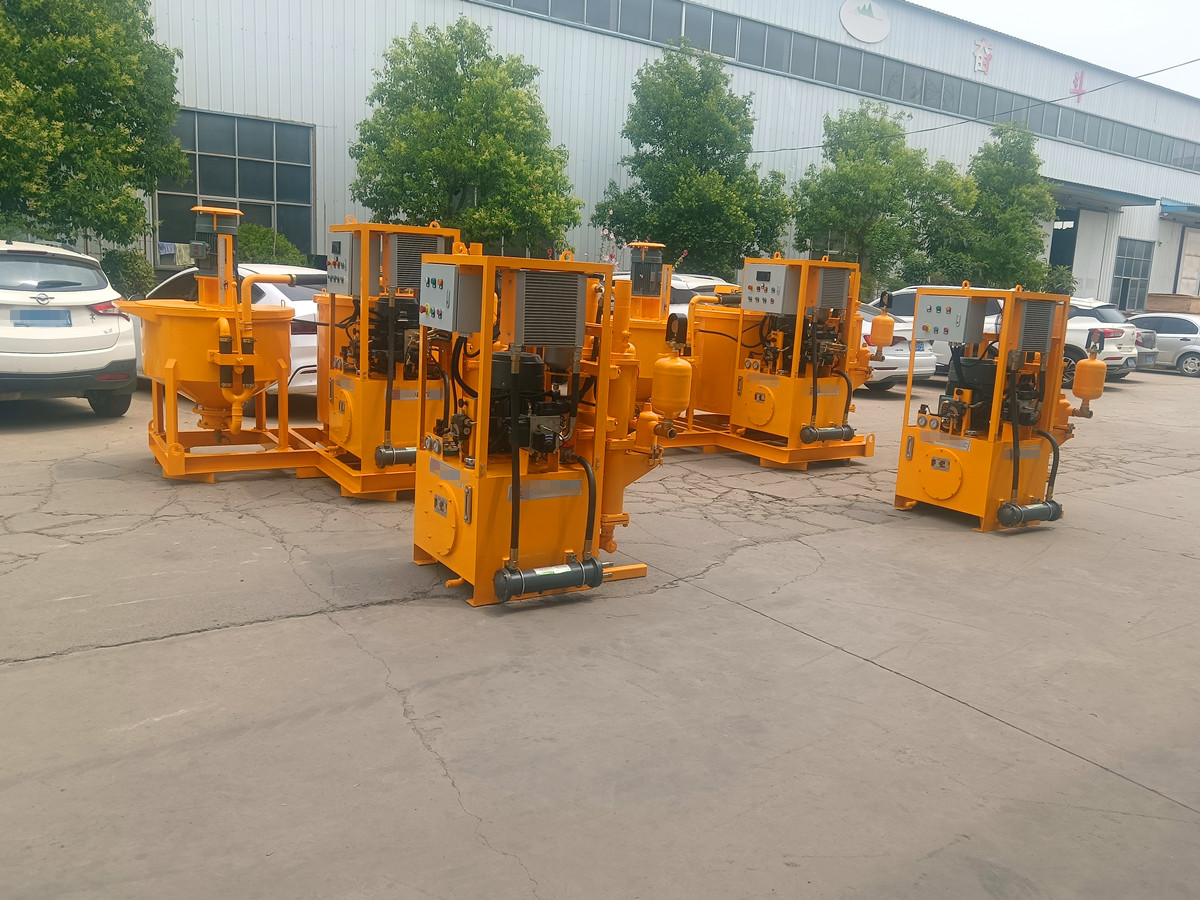
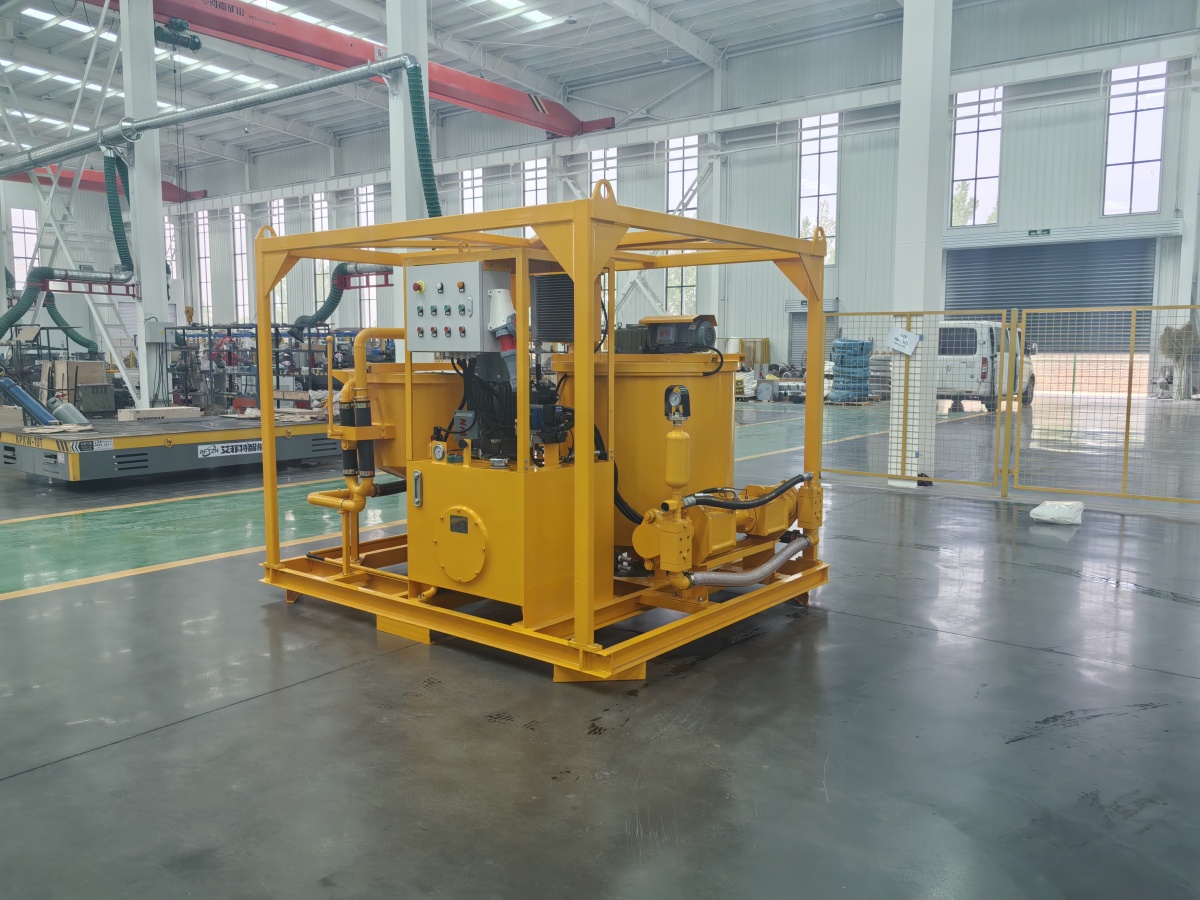
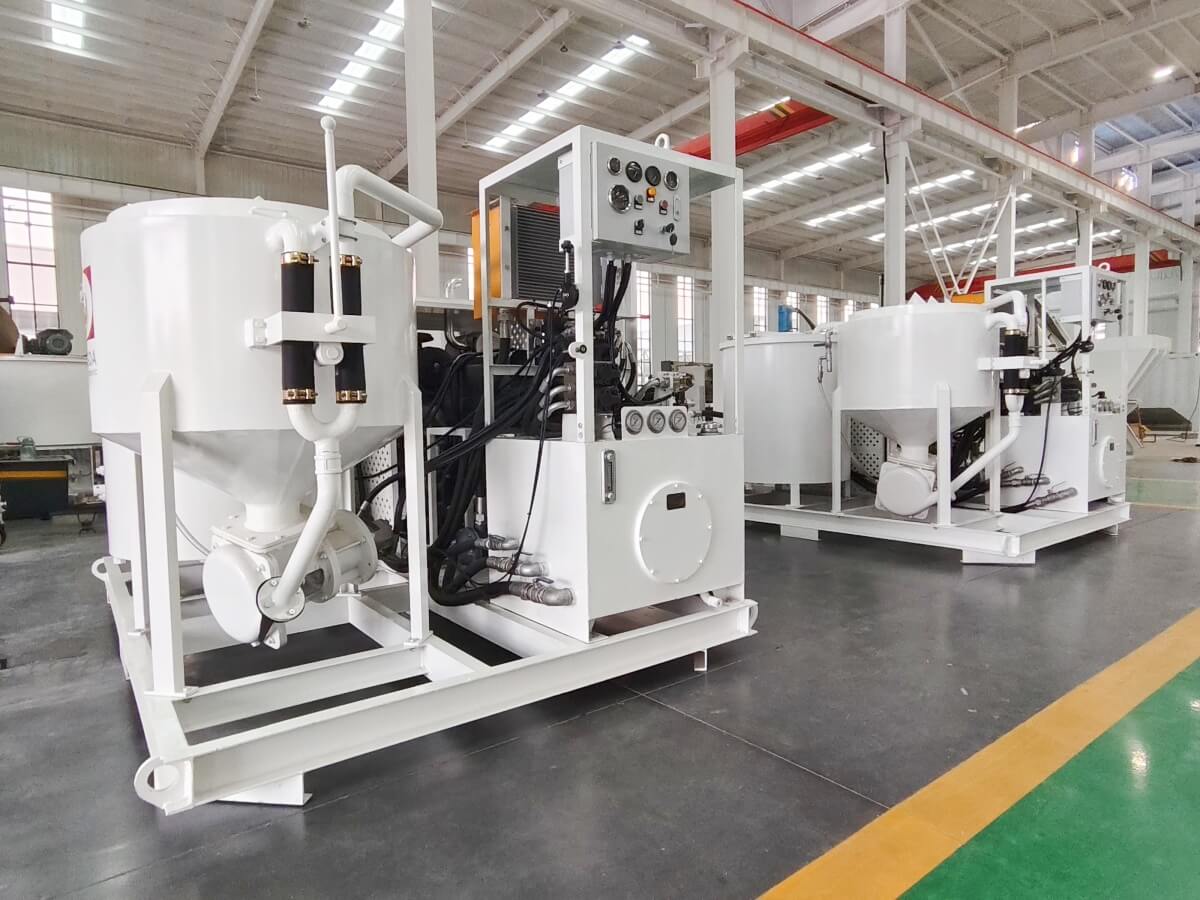
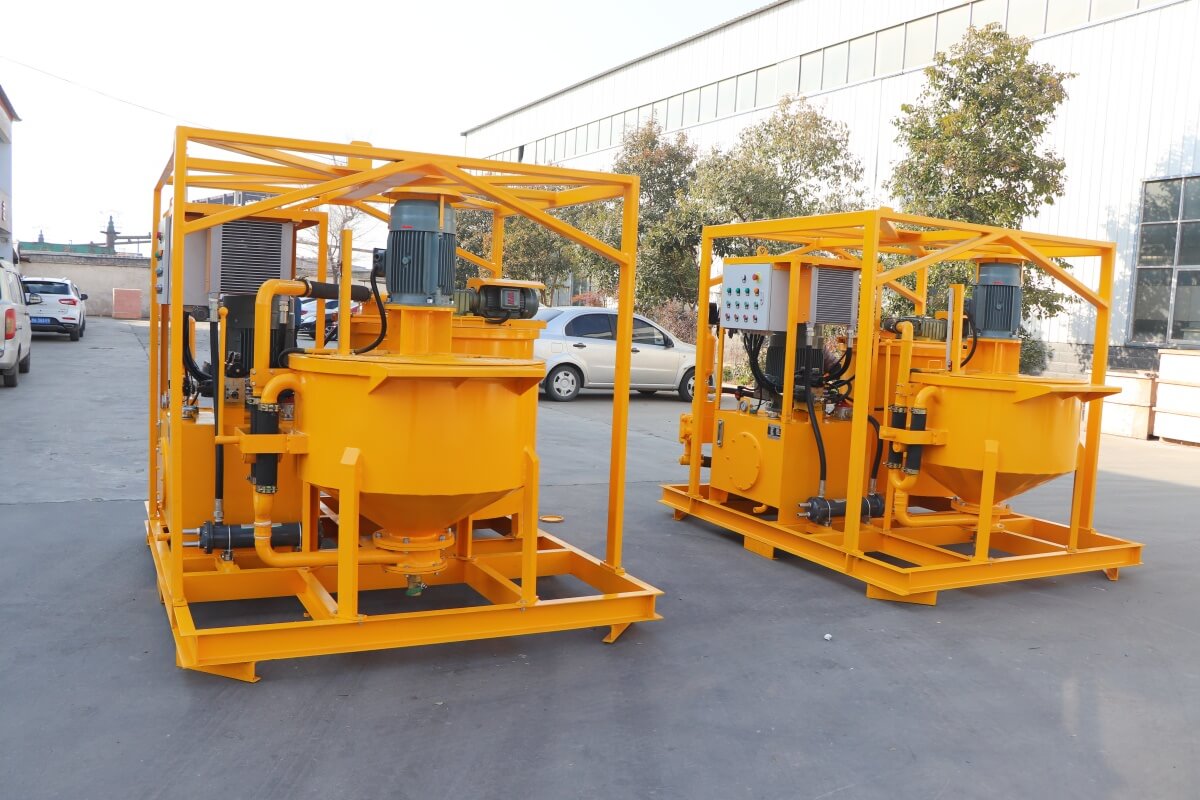
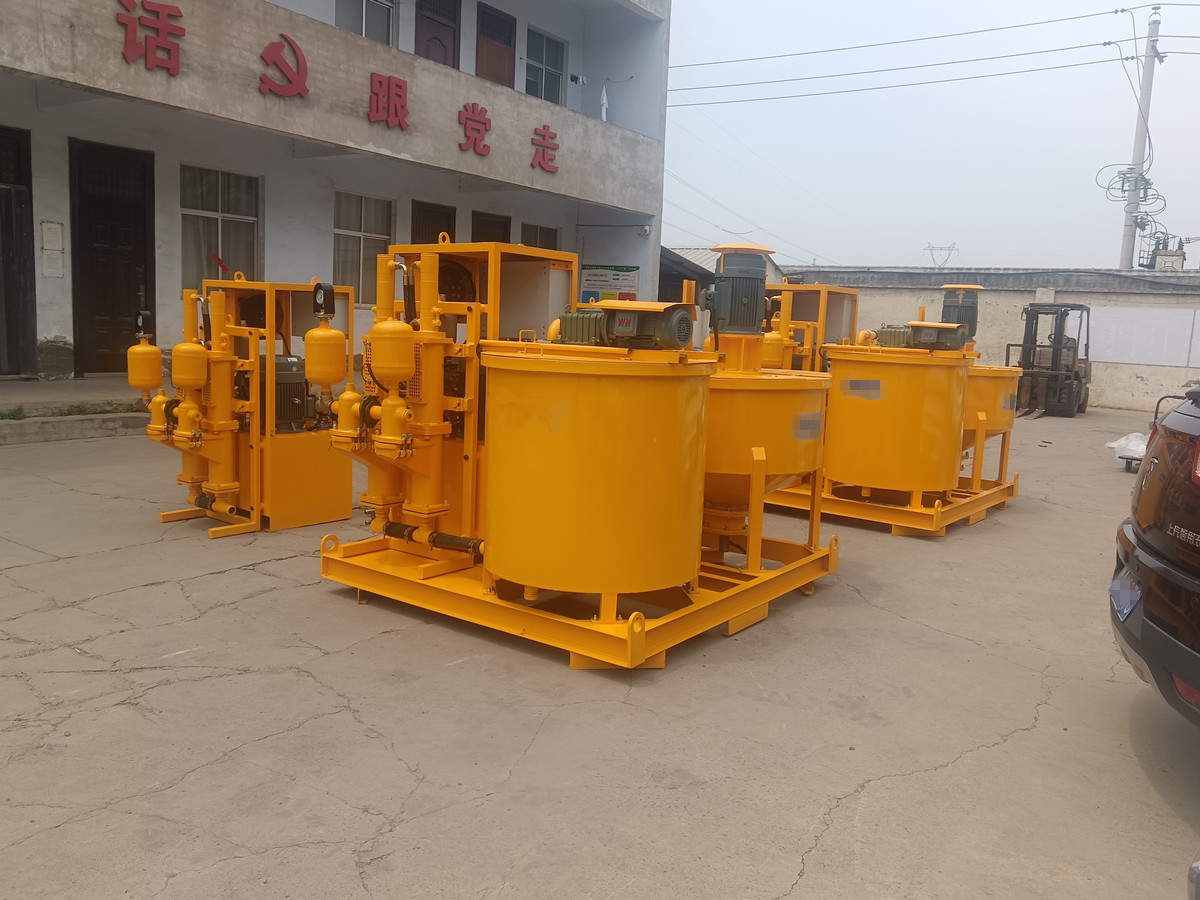
A tunnel grout station is a complete set of equipment for grout preparation, storage, and high-pressure grouting in tunnel construction. It is mainly used for: grouting of pre-support (pre-support small guide pipes, pipe roof); grouting of backfill behind initial support; grouting of surrounding rock consolidation (water plugging + reinforcement); grouting of backfill behind secondary lining; and water plugging grouting in karst, water-rich faults, and fractured zones.
The grout station utilizes a high-speed vortex mixer to ensure rapid and uniform mixing of cement, water, and additives, preventing grout segregation. The grouting pump is equipped with variable frequency speed control or hydraulic control, allowing parameters to be dynamically adjusted according to geological conditions (e.g., low-pressure slow grouting for soft soil layers, high-pressure infiltration for rock strata). Driven by a diesel engine, the hydraulic system of the Grout station requires no external power supply, making it suitable for environments without electricity (such as mountain tunnels and water diversion tunnels).
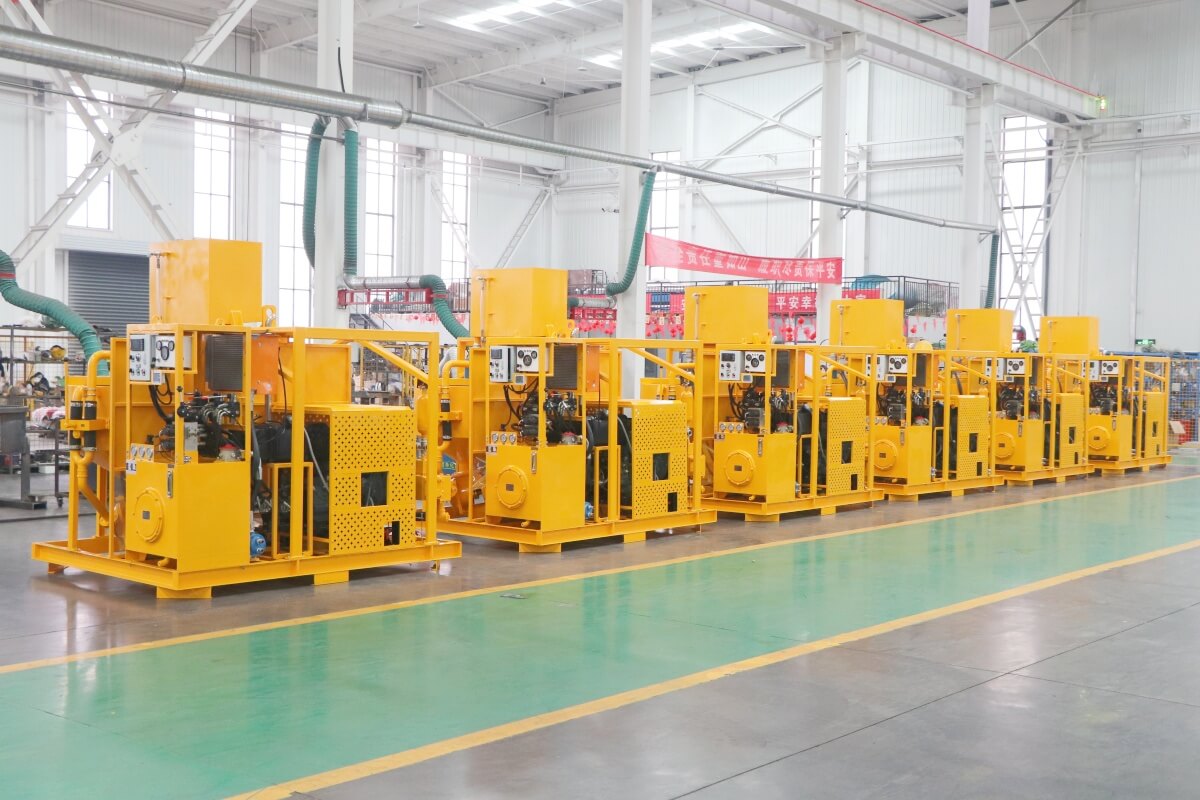
Grout station typical applications:
Synchronous Grouting in Shield Tunnels: During shield tunneling, grouting behind the tunnel segments fills voids, controlling ground settlement.
Rock Reinforcement in Mountain Tunnels: Pre-grouting of fractured rock masses forms a water-stop curtain or reinforcement ring, improving construction safety.
Tunnel Repair and Reinforcement: Chemical grouting repairs leaks, cracks, and other defects, restoring structural durability.
Grout station’s specific application scenarios in tunnels:
① Pre-grouting with small guide pipes (most commonly used): Pre-grouting in front of the tunnel face; reinforcing surrounding rock and preventing collapse; pressure: 0.5–2.0 MPa
② Pipe roof grouting (large pipe roof / long pipe roof): Entering the tunnel, shallow buried sections, underpasses of roads / buildings; forming a steel pipe + grouting consolidation arch; pressure: 1.0–3.0 MPa
③ Surrounding rock consolidation grouting & water-blocking grouting: Fractured zones, water-rich sections, karst; single-component / double-component grout; pressure: 2.0–6.0 MPa
④ Backfill grouting behind the primary support: Filling the gap between shotcrete and surrounding rock; preventing voids, settlement, and water seepage.
⑤ Backfill grouting behind the secondary lining: Filling the gap between the secondary lining and the primary support; ensuring structural density and reliable waterproofing.